
Heri Dono
b. 1960, Jakarta, Indonesia
Lives and works in Indonesia
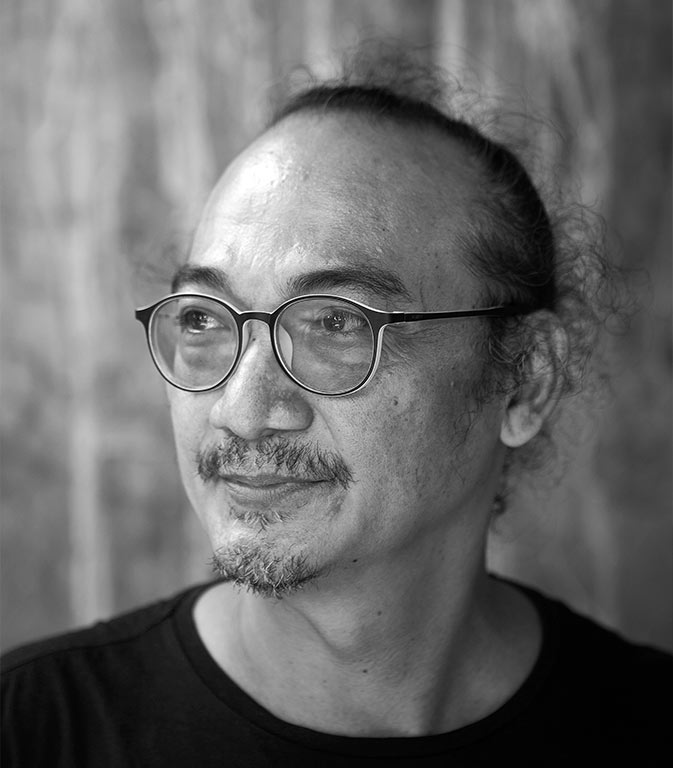
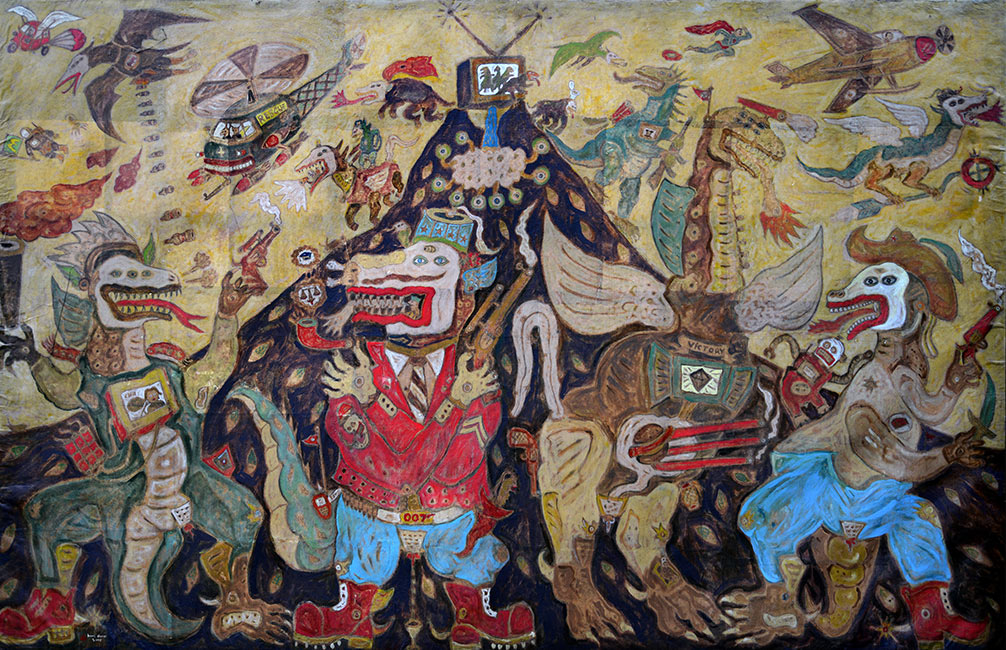
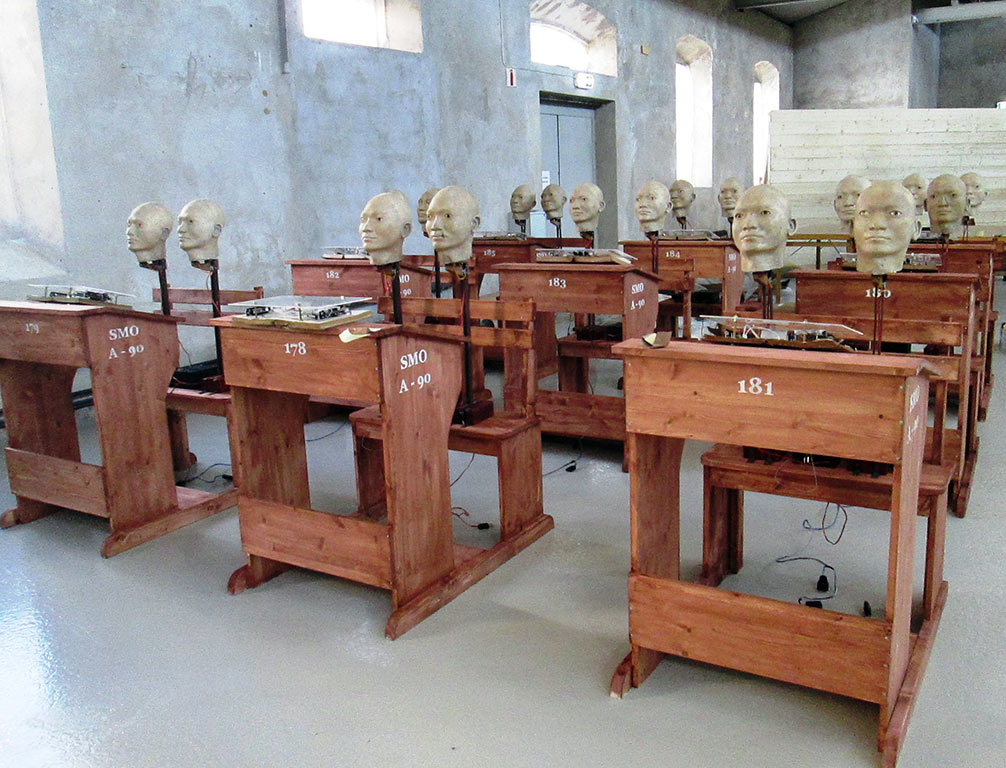
Heri Dono is recognised as the first Indonesian artist to gain prominence in the global art landscape in the early 1990s. Merging contemporary influences such as cartoon animations with the art of wayang kulit, the traditional Javanese shadow puppet theatre, his paintings, sculptures, installations and performances employ satire to confront systems of oppression.
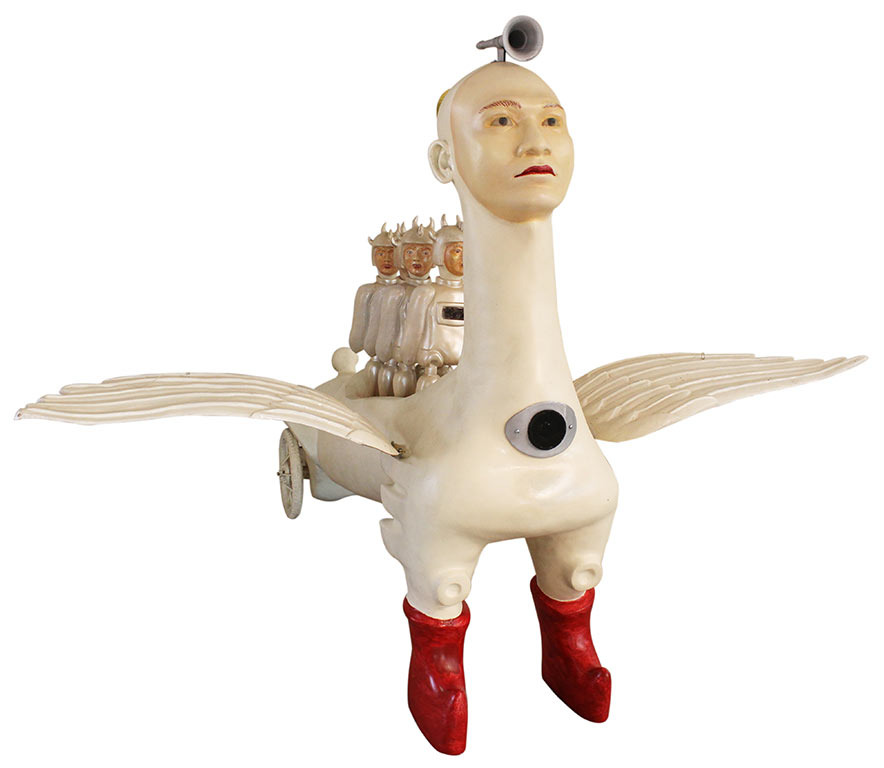
The New Order authoritarian regime of Indonesia (1966–1998) formed the backdrop to Dono’s early art education and career. It motivated his creative experiments with wayang kulit—commonly used to promote Javanese traditions—to subtly express sociopolitical criticism amid widespread censorship. Across canvases, theatre screens and freestanding forms, satirical renderings of humans, animals, machines and hybrid creatures play out stories that merge reality and fantasy. Since the 1990s, Dono has introduced multimedia elements into his installations. The kinetic work Flying Angels (1996) features floating figures—a cross between biblical cherubs and traditional Javanese puppets—equipped with mechanised wings and open chests that emit recordings of birds and crickets. It explores the complex sociopolitical realities faced by a rapidly transforming Indonesia in the wake of globalisation.
Dono received his art education at the Indonesian Institute of the Arts, Yogyakarta (1980–1987) and studied wayang kulit under the master Sigit Sukasman in Yogyakarta (1987–1988). His work is found in major collections including Guangdong Museum of Modern Art, Guangzhou; Fukuoka Art Museum; Museum der Kulturen, Basel; National Gallery of Australia, Canberra; Okinawa Art Museum; National Gallery of Indonesia, Jakarta; Queensland Art Gallery and Museum of Modern Art, Brisbane; Singapore Art Museum; Museum de Lakenhal, Leiden; and Tropenmuseum, Amsterdam.
Biography information from STPI, January 2026