
AWDB speaks to curator Selene Yap about her role curating the 2025 Singapore Biennale, which returns with the theme ‘pure intention’. Part of a four-person curatorial network, Yap oversees a Biennale that unfolds across public spaces. From Fort Canning Park to Lucky Plaza, inviting artists to work with the city’s everyday rhythms rather than against them.
The Biennale’s approach centres on how meaning emerges through improvisation, proximity, and the unnoticed structures that organise urban life. Yap reflects on working with regional collaborators, rethinking familiar sites, and the negotiation between intent and outcome that underpins SB2025’s expanded methodology.
How did you interpret the theme ‘pure intention’, and how did that shape the projects you chose to develop?
Singapore is often described as a space built with intention, but for Singapore Biennale 2025, intention is not the whole story. Systems have afterlives, and everyday acts are formative, acquired, and sometimes improvisational. ‘pure intention’ is meant to draw attention to the incidental and peripheral, including the moments where meaning emerges from sensitivity, how fragments hold each other in space, and how attentiveness to environments can reveal unexpected connections.
One way we explore this is by approaching the Biennale and the city as a series of propositions, slowing the drive for singular explanations and inviting artists to compose within or reroute existing flows.
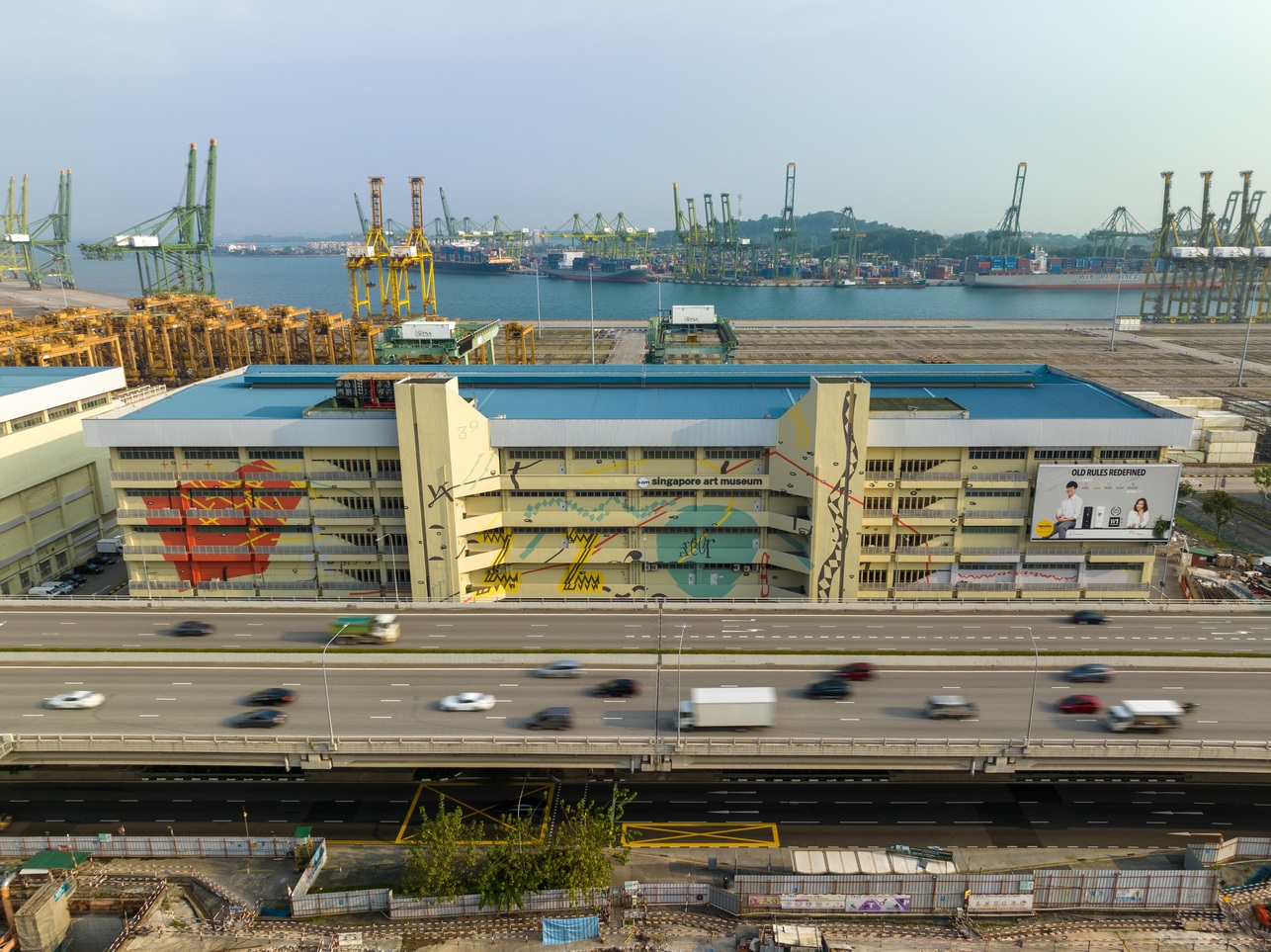
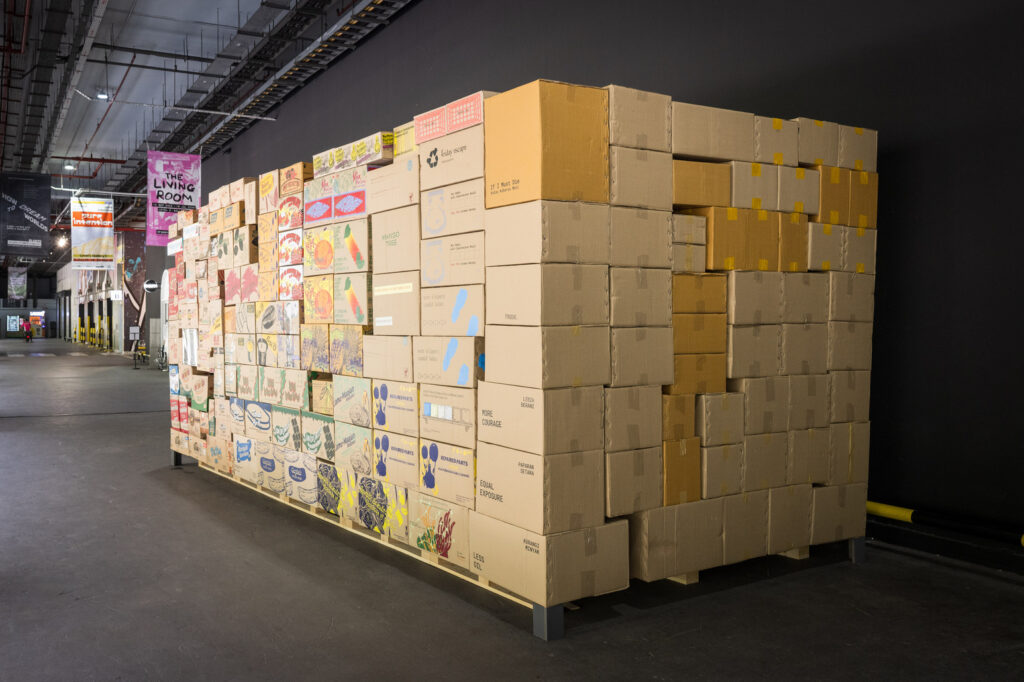
This approach is reflected in CAMP’s ‘Metabolic Container’, which reworks a standard 20-foot shipping container into an active, circulating system. Starting from 400 boxes of everyday goods moving weekly from Batam to Singapore, the container becomes more than transport: a space where goods are sorted, combined, circulated, and reconfigured. Inside, the arrangement follows a diffusion-inspired flow where boxes meet neighbours, features are sampled, noise is introduced, and new patterns emerge. Visitors enter one at a time, experiencing the container as a metabolising system linking logistics, everyday consumption, and the site itself. Situated at the Singapore Art Museum at Tanjong Pagar Distripark, the work mirrors flows into Singapore while revealing how systems behave up close, showing the unexpected possibilities that emerge when intention meets improvisation.
In what ways do you see SB2025 reflecting the conversations happening across Southeast Asia right now?
While SB2025’s artworks are grounded in Singapore, the core tension of the theme, ‘pure intention’ — the contradiction between outcome and intent — is a universal human and societal experience. Visitors from across the region can recognise similar dynamics in their own urban environments, and the Biennale encourages them to connect Singapore’s specific narratives to broader regional conversations about progress, power, and their consequences.
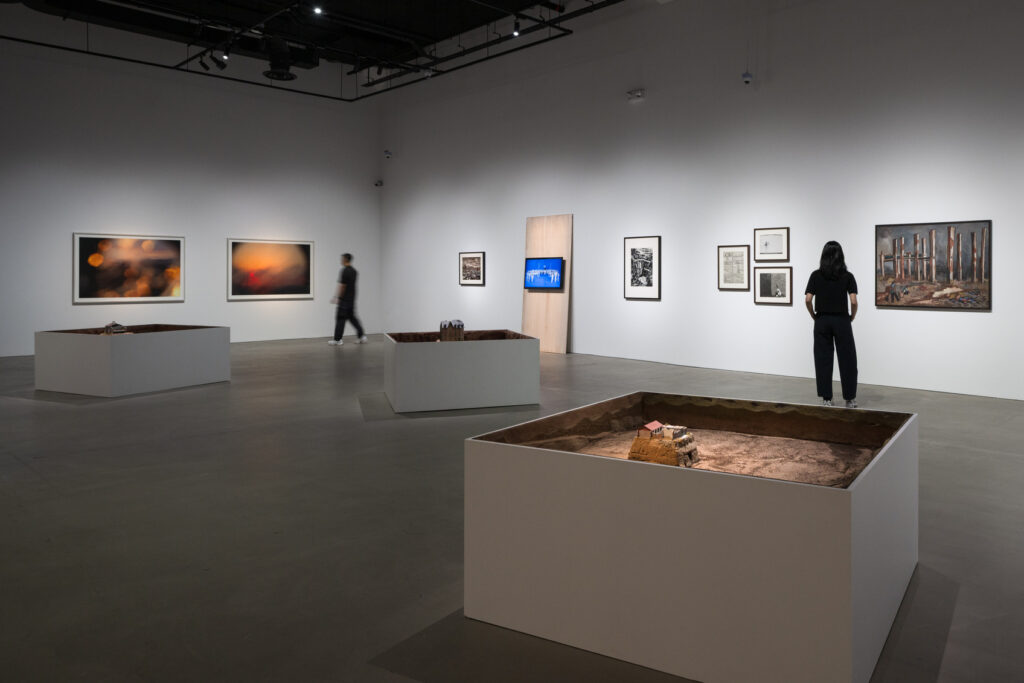
For example, curatorial contributor Hyphen— presents ‘Tokoh-tokoh, pengabdian, dan peradaban (Figures, dedications and civilisations)’, a response to decaying dioramas in Jakarta that invites reflection on sovereignty, solidarity, and questions of who belongs in a nation’s narrative. Miniatures were remade through workshops with art students and some of the individuals previously involved in the creation of the original diorama, highlighting processes of transgenerational collaboration, memory, and agency. Hyphen— also presents contributions from diverse artists such as Emiria Sunassa, Julian Abraham “Togar,” and Presiden Tidore. Together, these works foster an ongoing dialogue on agency and diplomacy as visitors encounter the varied works at the Singapore Art Museum at Tanjong Pagar Distripark.
SB2025 unfolds across a wide range of everyday and public spaces. How do non-traditional sites affect your curation?
Past editions of the Singapore Biennale redefined our way of thinking and responding to the world around us. This can be through defying what an international art exhibition can be, or by sparking conversations around new formats and ideas through art. In recent years, art has gone beyond conventional museums and galleries to creatively reach audiences in spaces where they live, work and play.
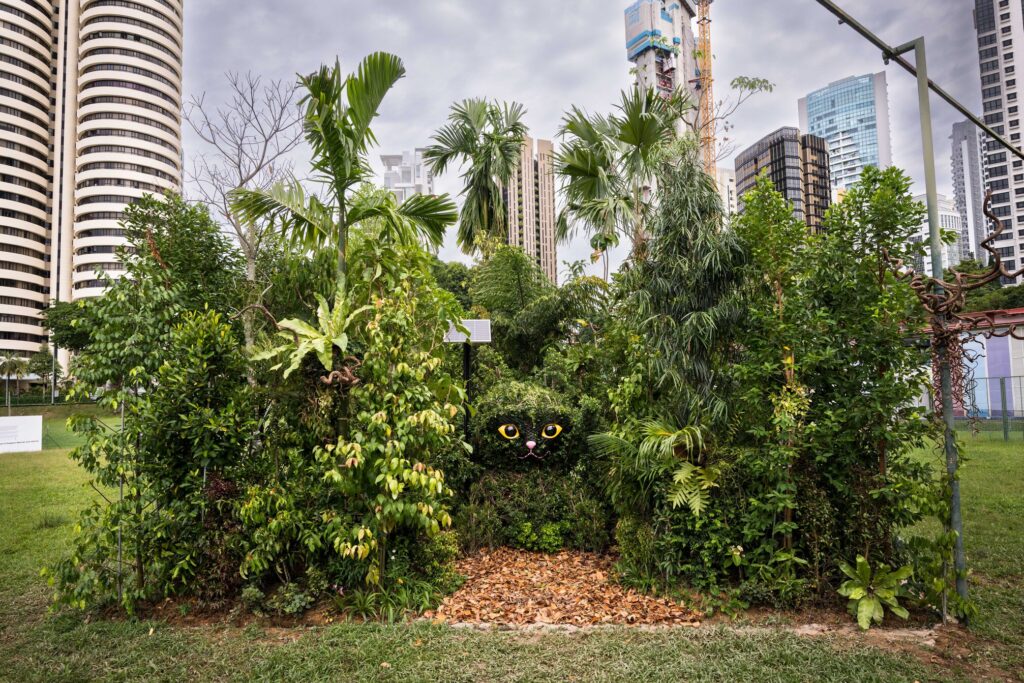
SB2025 builds on this momentum of engaging with art in our everyday lives by deliberately occupying spaces that speak to the concept of pure intention. The typology of distinct spaces, from pre-colonial and colonial landmarks to green areas and strata malls, was curated for their characteristic of being a “place within a place”. Beyond just physical access, these spaces opened up opportunities to engage with diverse communities that have called Singapore home over the years, creating access to their unique perspectives and stories that continue to shape our country’s transformation.
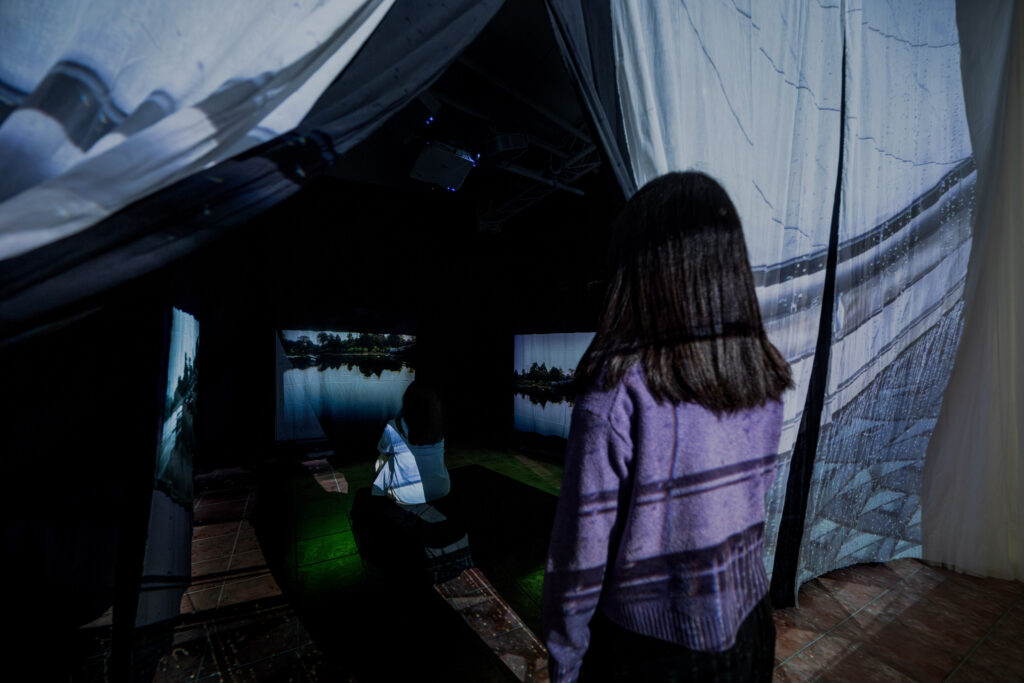
One project is Apichatpong Weerasethakul and Guo-Liang Tan’s ‘Two Who Remember the Sea’. What moves me is how the work teaches us to read vernacular space not through grand symbolism, but through the quiet intelligence of the environment itself. The silver curtains simply respond: to wind, humidity and light. In Wessex, a place layered with domestic histories, military traces and everyday use, the installation makes those textures newly legible. Letting the site speak and allowing the works to recalibrate how we sense the ordinary is at the centre of the curatorial perspective behind pure intention.
The former Raffles Girls’ School campus at 20 Anderson Road is also an exciting site for SB2025 as the school is known for its progressive curriculum. For the Biennale, we have transformed it into a lively playground of artistic discovery, presenting artist projects that connect scientific, historical, spiritual, and embodied knowledge and explore how these diverse forms of knowledge are produced and shared across generations.
Eisa Jocson’s participation brings a distinct perspective on labour, performance, and identity. What drew you to her practice for SB2025?
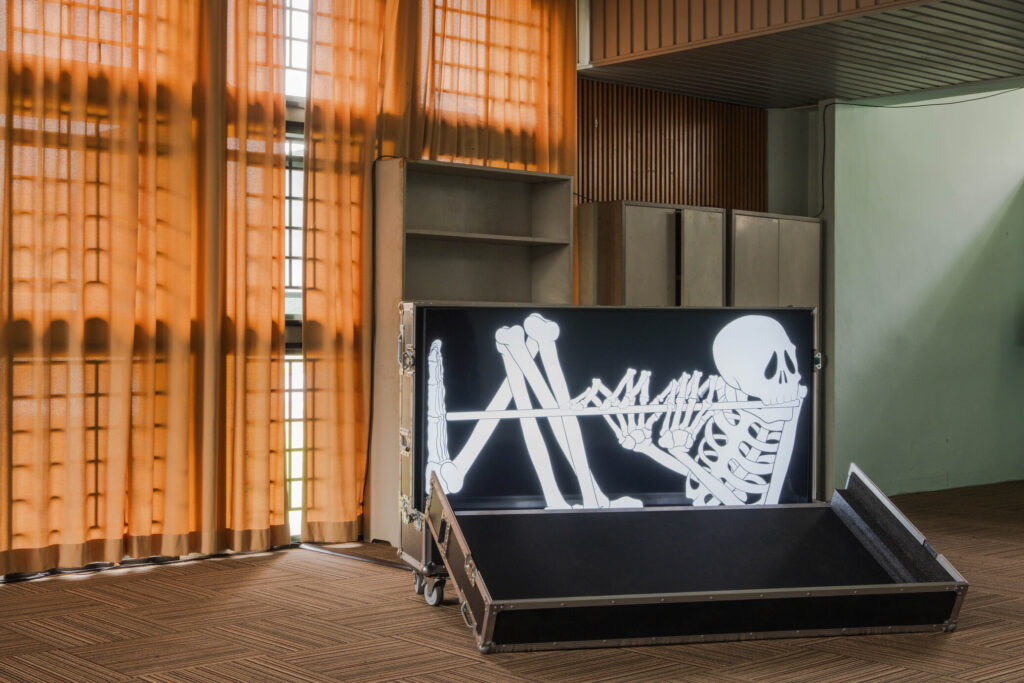
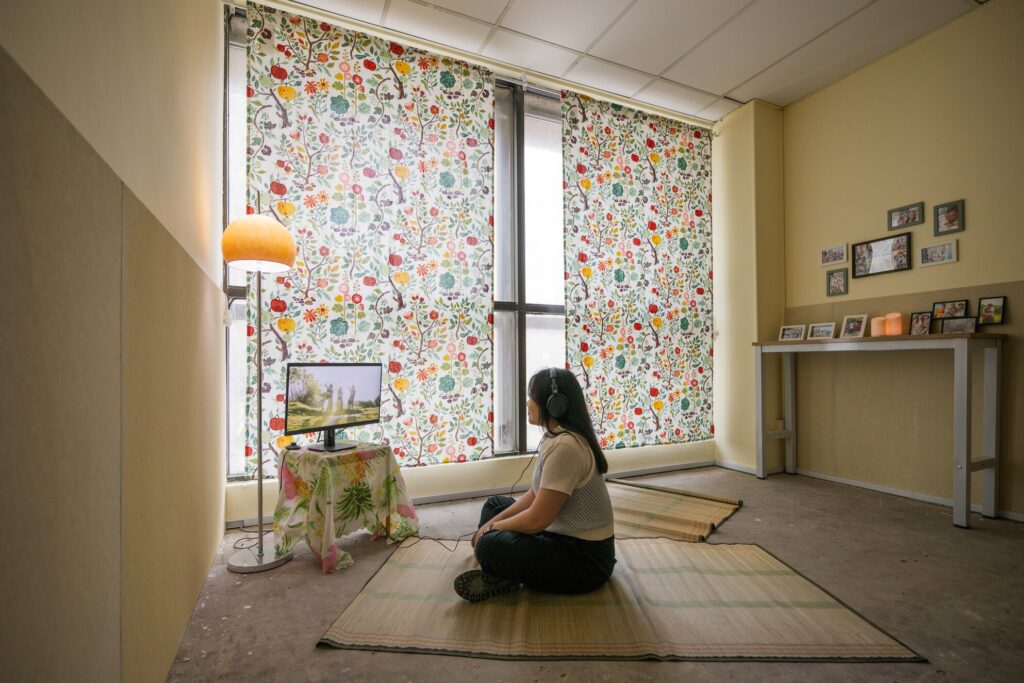
Eisa is an interdisciplinary artist whose practice examines body politics in the service and entertainment industries, focusing on how social mobility and migrant labour shape movement within and beyond the Philippines. For SB2025, she presents ‘The Filipino Superwoman X H.O.M.E. Karaoke Living Room’ at Lucky Plaza, a Filipino enclave. She transforms a shop unit into a living room set-up inspired by Filipino karaoke gatherings (Bidyoke), creating a participatory space where performance, community, and audience intersect.
In collaboration with the Humanitarian Organisation for Migration Economics (H.O.M.E.) and Filipino domestic workers based in Singapore, Eisa developed a series of karaoke videos exploring kinship, aspiration, and feminine empowerment. Participants worked through workshops to storyboard and self-produce music videos of personal anthems, drawing on oral traditions of heroic tales through epic poetry and celebrating dignity, resilience, and collective feminine agency across generations. Visitors are invited to step inside the shop unit, sing along, and take part in a shared experience that reflects on caregiving and domestic labour, revealing both the joys and the sorrows of displacement and sacrifice.
Does working at the large scale of a Biennale shift any part of your curatorial methodology?
With a curatorial team comprising Duncan Bass, Hsu Fang-Tze, Ong Puay Khim, and myself, we were conscious that approaching the Biennale from within local institutions comes with particular ways of seeing and working. To complicate and broaden this perspective, we invited curatorial contributors such as Hyphen— (Indonesia), The Packet (Sri Lanka), Asian Film Archive (Singapore), and Hothouse (Singapore) to organise their own projects within SB2025. Some are collectives, others are formal organisations, but each brings a distinctive methodology that we deeply admire.
We also worked with a diverse group of artists from around the world, inviting them to respond to the framework of pure intention in an open-ended way. They were free to embrace or question the theme, allowing the Biennale to hold polyvocal perspectives.
The scale of the Biennale creates unprecedented opportunities for experimentation, collaboration, and audience engagement.
For example, Akira Takayama/Port B presents ‘Theatre-Let Project: Board Game Centre Edition’, a newly commissioned roving project across the Woodlands, Jurong, and Tampines regional libraries, as well as 20 Anderson Road. Developed with students from the National University of Singapore’s Architecture Department, it comprises 11 board games that create a psychogeographical map of Singapore’s cityscape, inviting audiences to re-experience the city. At 20 Anderson Road, we will further engage visitors with programming where visitors can play these board games on-site.
Singapore Biennale 2025: ‘pure intention’ is on view at multiple galleries and spaces across Singapore. For more information, please click here.
INTERVIEW COURTESY OF ART WORLD DATABASE AND SELENE YAP, DECEMBER 2025