
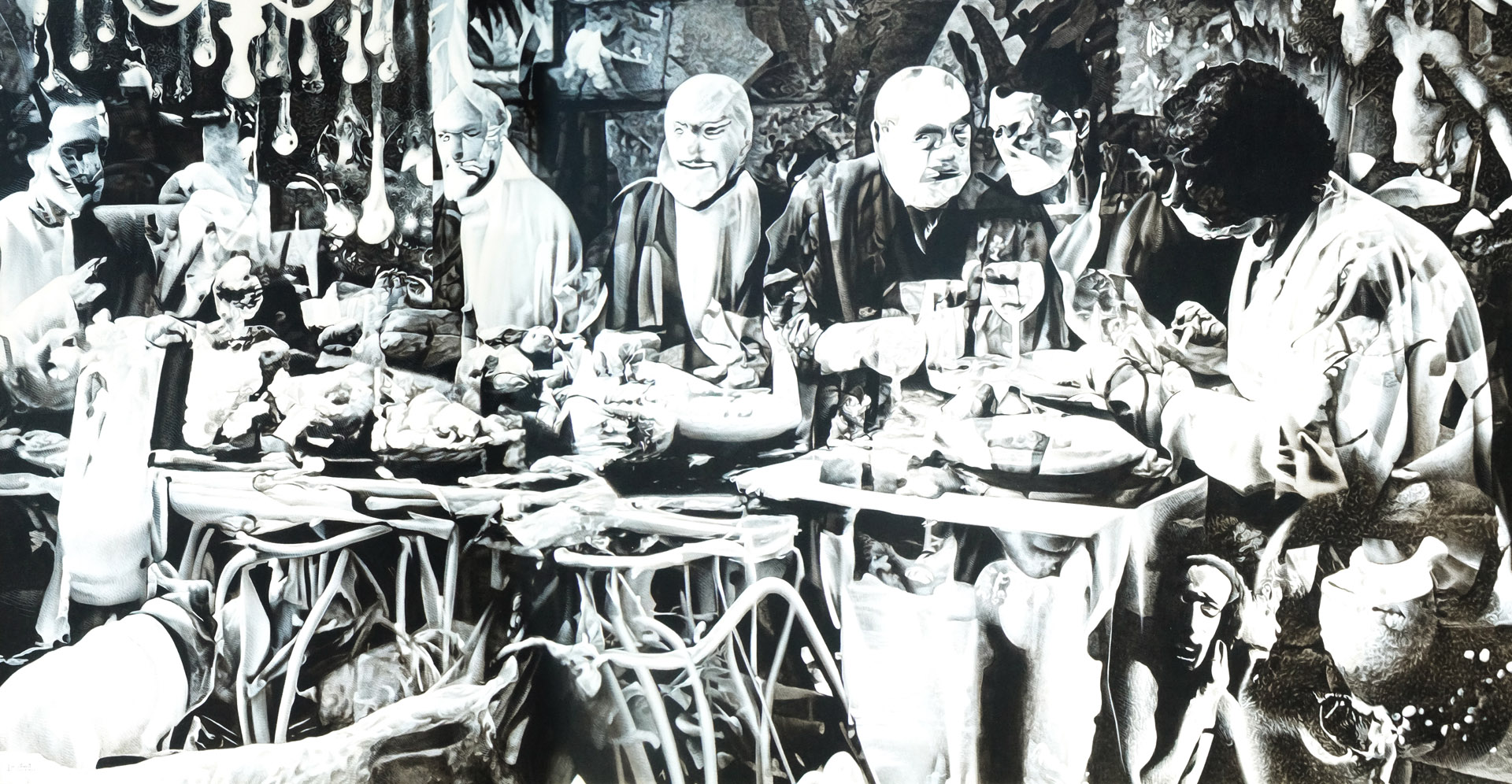
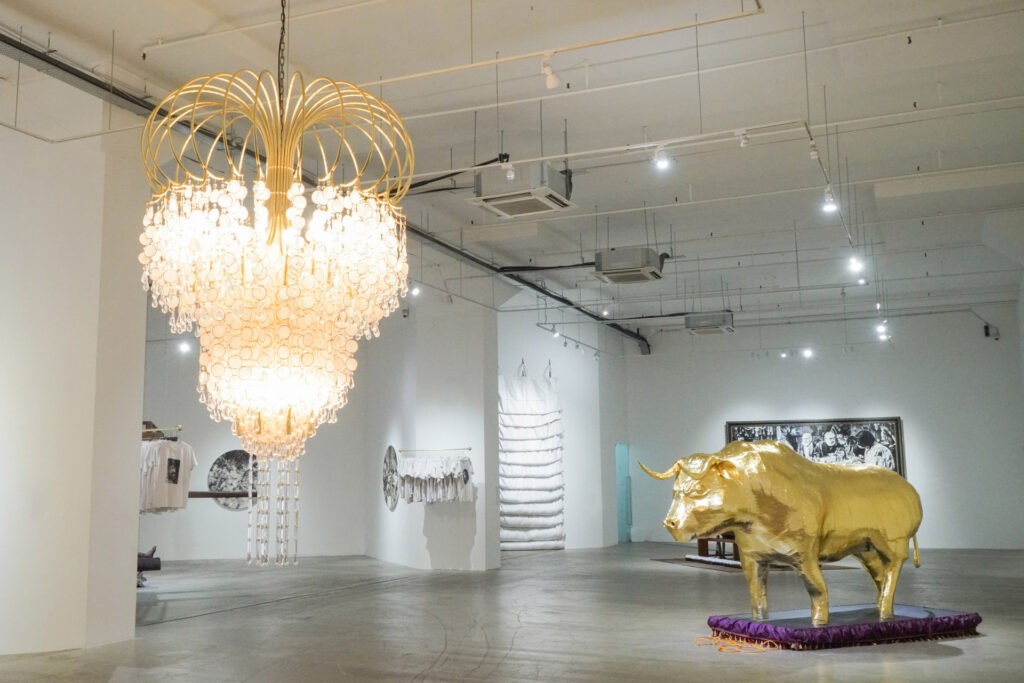
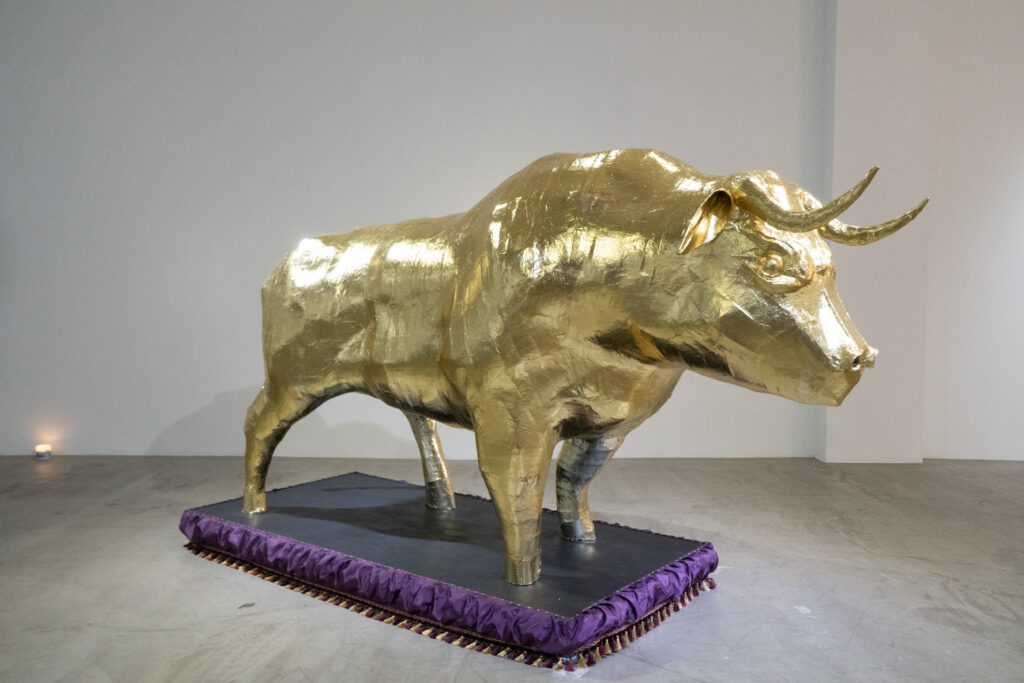
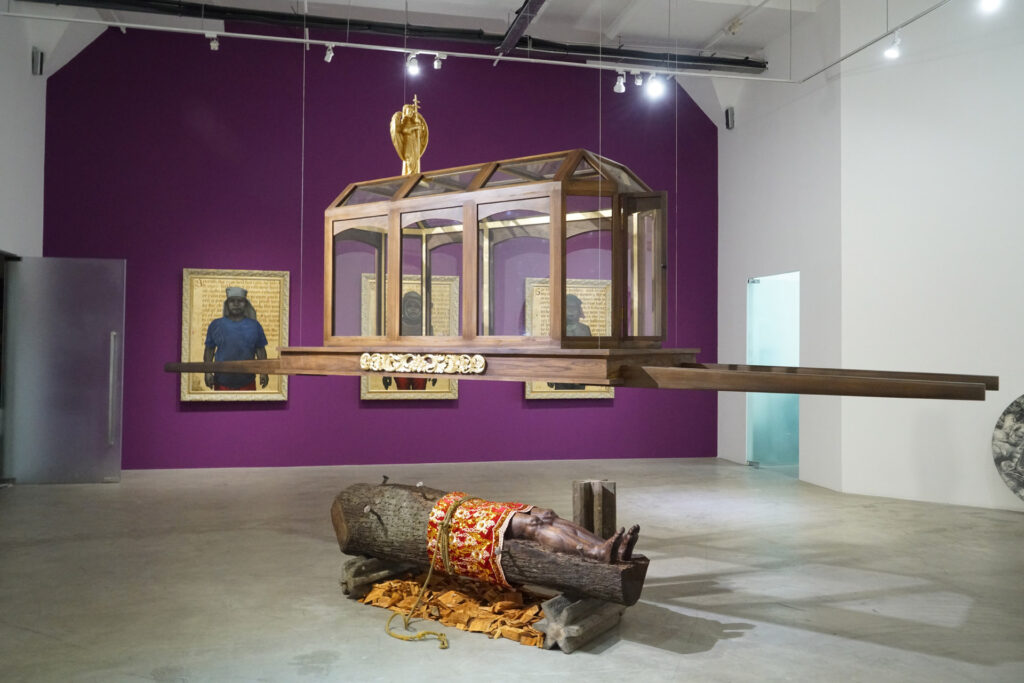
AWDB speaks to Filipino artist Leslie de Chavez on the occasion of ‘A Kiss on the Ground’ at Gajah Gallery, Singapore. Drawing from the rituals and festivals of his hometown Lucban, Quezon, the exhibition reflects on how faith, power, and community intersect in everyday life. Working with local artisans and residents, de Chavez uses symbols of devotion as starting points to explore society.
Known for his sharp engagement with history and religion, de Chavez uses an array of mediums to question how colonial legacies and corruption persist in the Philippines today, and how ritual, in turn, can become a form of resistance.
What was it like returning to your home, Quezon, through your practice and with art in mind?
It wasn’t that I had been away from home for a long time. It was a kind of proximity in a metaphorical sense. “Returning” meant allowing myself to be drawn back to a too-familiar place and taking another look at it—to see more of what I’d missed seeing and understanding while growing up there. It took years for me to grasp how art, and the act of making it, can reveal the layered complexities hidden beneath the everyday life of the community I come from and still belong to.
The Lucban rituals appear to blur the lines between festivity, faith, and resistance – how do you see them?
I believe the blurring of these rituals arises mainly from how members of the community interpret and express them. Through art, I’ve been able to glimpse the intricate ways these practices intertwine with power—both the established and the emerging, the transformed and the contested, as well as those still cherished for their spiritual influence on our collective life. With these insights, I aim to share a process of deconstruction that serves not only as a critique of ritual behaviors and their material forms, but also as a means of examining their essential role, place, and meaning in our everyday existence.
The idea of “home” is central to this exhibition, and it’s something many artists are exploring today. What makes your approach to it distinct?
I liken my approach to this exhibition to the Filipino folk song “Bahay Kubo,” which depicts “home” as a small, humble structure surrounded by abundance yet marked by contradictions. In a similar way, although the exhibition does not explicitly center on the idea of home, it is shaped by the complex structures, rituals, and histories that surround the notion of place—as something at once personal, communal, and spiritually universal.
Corruption is a persistent point in your practice. What aspects of it still linger, and what are you looking to explore next?
Its persistent imprint on our collective DNA continues to assert itself, I would say. While I recognize that art alone cannot change the world, artists must continuously—and in various ways—challenge the enduring presence of abusive power. In recent years, I have sought to create alternative paths for change through art made in and with the community. By reshaping how we engage communities through art, and how they experience it in their everyday lives, we nurture hope for a more meaningful and lasting impact. For the past 18 years, I have been running Project Space Pilipinas, an independent, non-profit artist initiative in Lucban. Our guiding principle is inclusivity—an approach that emphasizes presenting art and involving local audiences in ways that make artistic meaning more relevant and beneficial to the community.
What is the state of religion in the Philippines, and do you think art can genuinely challenge power structures?
Religion, especially in the Philippines, is like a favorite piece of clothing. No matter the season, occasion, or company, people wear it not just for comfort, but because it carries deep meanings tied to personal and communal identity.
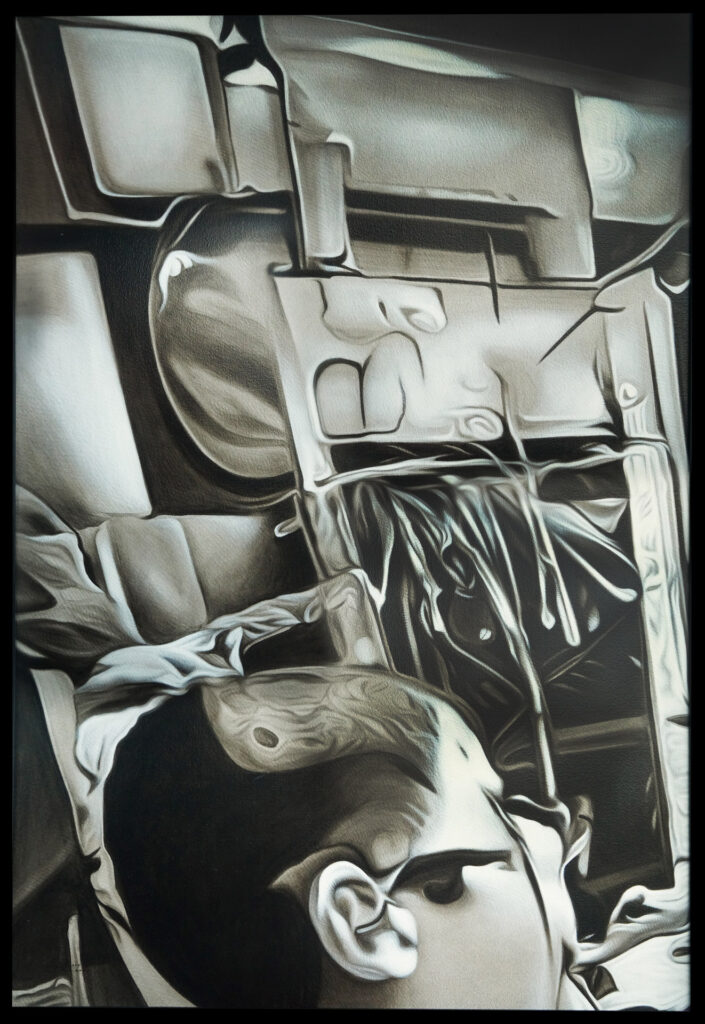
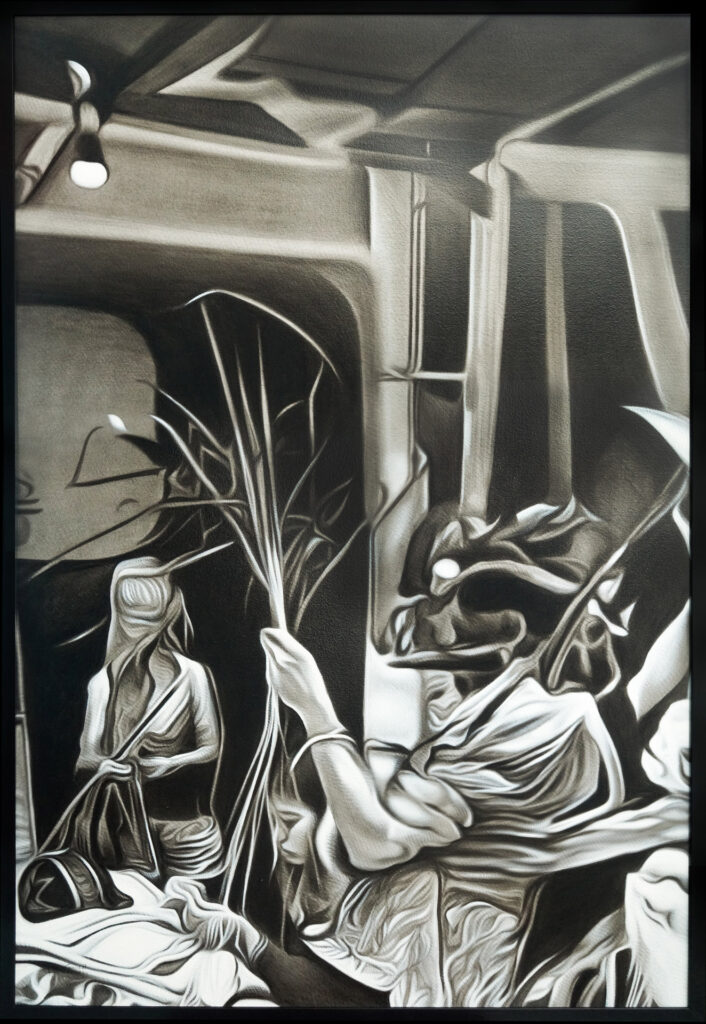
I use religious symbols in my work as mirrors of themselves. Much like how advertising and fashion appropriate these icons for their aesthetic power, I reintroduce them in art so they can act as conscious, decolonizing agents—reflecting on and questioning the very meanings and platforms they inhabit. In this sense, they function as a kind of postmodern device.
Yes, art can—and always will—challenge power structures. But it will remain relative to the question of its being “genuine” in terms of challenging those structures.
‘A Kiss on the Ground’ is on view at Gajah Gallery, Singapore until 30 November. For more information, please click here.
INTERVIEW COURTESY OF ART WORLD DATABASE AND LESLIE DE CHAVEZ, OCTOBER 2025