
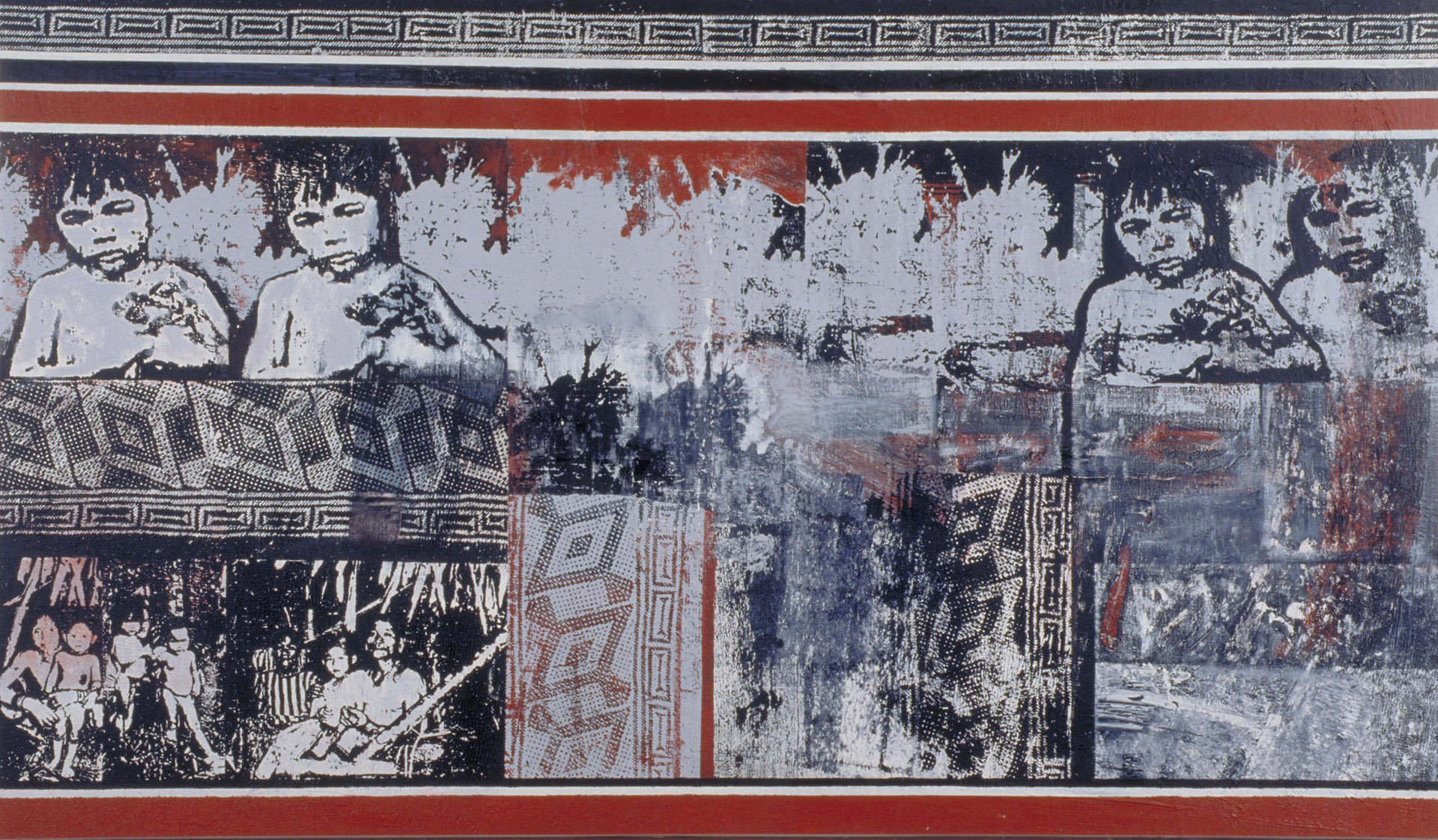
AWDB speaks with artists Imelda Cajipe-Endaya, Dolorosa Sinaga, Phaptawan Suwannakudt and Amanda Heng following a panel discussion held in conjunction with ‘Fear No Power: Women Imagining Otherwise’ at the National Gallery Singapore, featuring works by the four artists and the late Nirmala Dutt. Bringing together longstanding female artists from across Southeast Asia, the exhibition reflects on how artistic practices have developed alongside the region’s shifting political, social, and cultural histories.
Following the talk, AWDB asked the panel speakers a question, which they each responded to in relation to their practice: “What does the exhibition mean to you as a longstanding female Southeast Asian artist in the context of the region’s history, its colonial history, and societal change?”
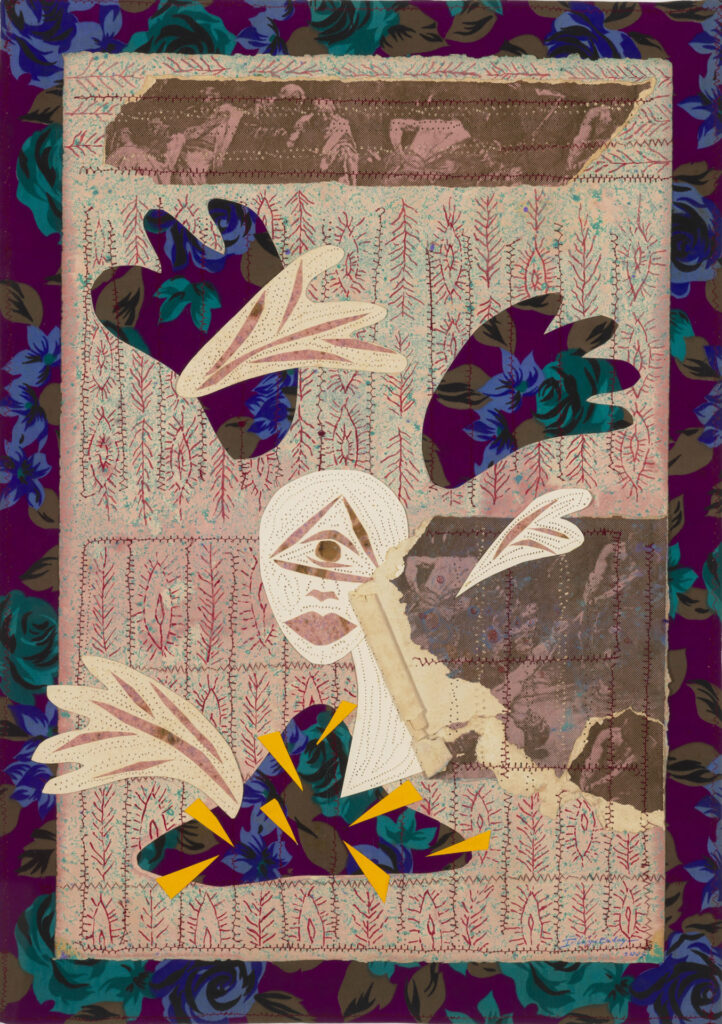
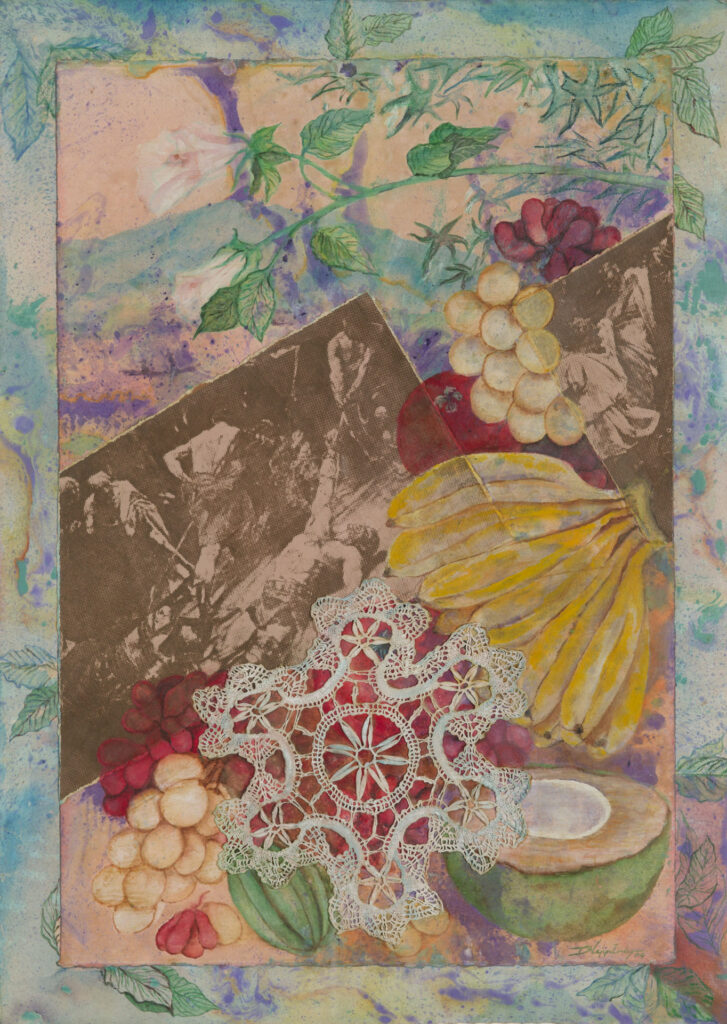
For Cajipe-Endaya, art and political awakening are inseparable. Speaking about her early work, she recalled the atmosphere of repression following the declaration of martial law under Ferdinand Marcos. “In 1971, martial law was declared by Ferdinand Marcos Senior… that meant we were to fear power because it was a military dictatorship. There was no free speech. You were so afraid. The media was closed, and everything was censored.”
Her print ‘Castigo’ emerged from this climate of fear, responding to state violence and extrajudicial killings. “‘Castigo’ is a protest about the extrajudicial killings. It was called salvaging then. In recent years, it’s come to be called extrajudicial killing, but they’re practically the same thing.”
Yet Cajipe-Endaya’s political awakening was also deeply personal. She explained that her understanding of feminism grew not through theory but through lived experience. “I learned feminism more in the personal experience of being in a hierarchical structure in the family – my father dictated everything.”
This awareness later shaped her role in founding the women’s collective Kasibulan in the late 1980s, which supported women artists who were largely excluded from exhibitions. “Men and women were equal in numbers, creating work. But it was the men who were exhibiting. Women were setting up men’s work, but nobody would do that for women.”
This recognition of overlooked labour has long shaped Cajipe-Endaya’s practice and her involvement in artist-led initiatives. When speaking to AWDB, she reflected on the exhibition’s broader significance within Southeast Asian art histories: “I’ve found that masterpieces such as Juan Luna’s ‘Spoliarium’ are mostly celebrated in artistic histories, while the work of women – whether in painting, craft, weaving, or other forms – have often remained invisible.”
“Through my practice, I have always wanted to bring forward the experiences of women and the communities around them. Fear No Power is meaningful to me because it reflects that our stories, labour, and ways of making art are also part of the region’s history. Women artists have come a long way, and I believe this collective strength will continue to shape the future of art.”
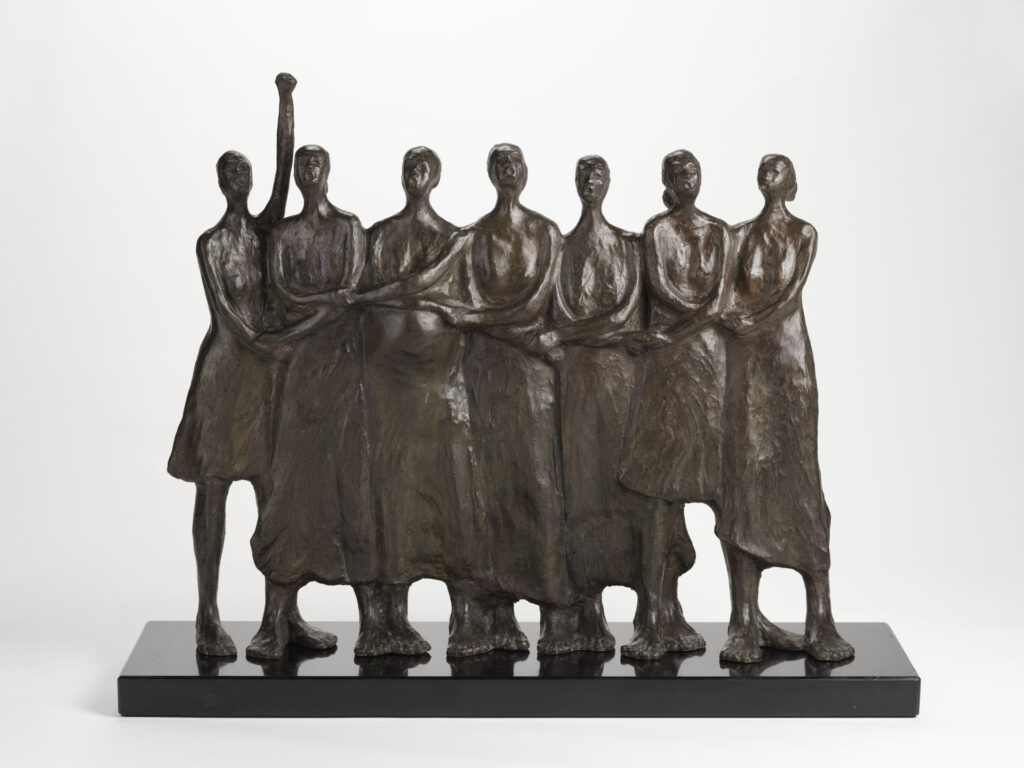
Indonesian sculptor Dolorosa Sinaga approached the discussion through the lens of activism and pedagogy. Much of her work engages directly with students and political movements. “Many women students in my art school often come to me and say, ‘Can I do this? Is it okay if I take this?’ – it shows they were afraid to do anything.” Her sculpture ‘Fear No Power’, which inspired the exhibition’s title, emerged from a desire to encourage younger artists to resist this fear. “I’d like to make them understand that you have all the rights to do what you want.”
Sinaga also reflected on the violence against women during the 1998 riots in Indonesia, which deeply shaped her understanding of solidarity. “My solidarity is actually devoted to all of them who were oppressed at that time, to stand up together, make a wall, hands in hands together.” Sinaga told AWDB that the exhibition highlights the role of solidarity among artists working through these shared circumstances:
“I am very happy to be part of this exhibition because I hope the works can speak beyond Indonesia and resonate across Southeast Asia. Our region has been shaped by colonial histories and political regimes that created fear and silence, especially for women. Through my sculptures, I want audiences to feel that they should not be afraid to make art or to express themselves. When a woman does not censor herself, that is her agency and her identity. That for me is what this exhibition shows: that women’s collective strength is deeply connected to the power of solidarity and human rights engagement, and how we continue to shape society together.”
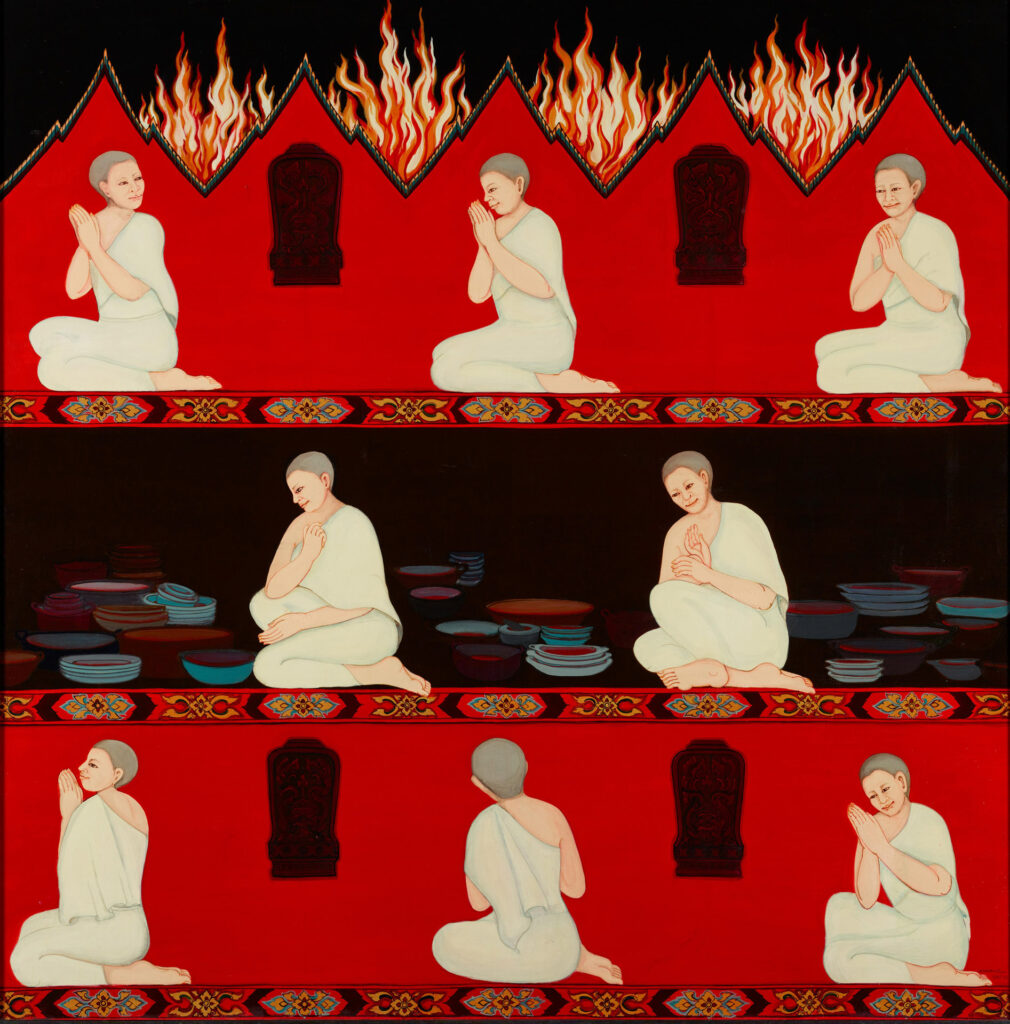
Thai artist Phaptawan Suwannakudt traced her artistic journey back to her childhood growing up in a Buddhist temple, where mural painting was historically dominated by men. “Because I am a woman and broke the taboo of the men-only domain of mural painting in Thailand, I became the first woman muralist in the Buddhist temple.”
Her reflections on gender inequality remain pointed. Recalling a recent exhibition talk where all invited speakers were male, she described the response when the imbalance was questioned: “The moderator responded without thinking, ‘Oh, I didn’t think about it.’ That response reveals the default setting of our industry where male authority is so normalised that the absence of women isn’t even perceived as a void.”
For Suwannakudt, feminist collectives such as Womanifesto emerged as spaces for conversation and mutual support. “It’s a platform where we can lie down and talk and gossip and eat and share snacks… that is the environment where we started talking about work and women’s work.” Working within these structures also revealed how opportunities were often unevenly distributed. As she reflected further with AWDB:
“Having grown up in a Buddhist temple and later working as a temple mural painter – a field traditionally led by men – I became very aware of how religion and society in Thailand are intertwined, and how opportunities and freedom of expression are not always equally extended to women. Much of my work draws from these lived experiences, using motifs such as the Naga or Nariphon to reflect on how women are positioned within religion, culture, and society. For me, Fear No Power is meaningful because it creates a platform for these perspectives – shaped by history, lived experience, and working outside social norms – to be seen and discussed.”

For Singaporean artist Amanda Heng, collaboration and social dialogue have long been central to her practice. Reflecting on the cultural shifts of the 1990s, she noted how women across Asia increasingly began to claim space in public discourse.
During the discussion, Heng spoke about ‘Home Service’, a participatory performance examining domestic labour and the presence of migrant domestic workers in Singaporean households. “It has become a kind of culture to engage a domestic worker from a foreign country, to help with bringing up the kids or taking care of the domestic chores.”
Through the project, Heng and her collaborators temporarily assumed the role of domestic workers, carrying out household tasks before inviting families to reflect on the value of such labour. “Working in a collaboration, you need to acknowledge differences – listening to others is a very important aspect for my work.” Heng describes, when talking with AWDB, developing a sense of resilience through her practice, something she sees reflected in the exhibition
“For me, the exhibition is about recognising the inner strength that I’ve found through creating work as an artist in Southeast Asia, especially within a region shaped by colonial histories and changing social structures. When I first began, there was little space or language for our experiences, but through my practice, I learned to trust a quiet resilience within myself. I hope that art can continue to play a larger role in Singapore, and that in time to come, we will find our own sincere expression in the arts.”
While the artists’ practices differ in medium, context, and generation, the discussion revealed how shared histories continue to shape artistic production across Southeast Asia. The exhibition foregrounds not only individual practices but also the networks of solidarity that have long sustained women artists in the region. By bringing these voices together, Fear No Powe’ invites audiences to consider how histories of resistance, collaboration, and persistence continue to shape the evolving landscape of Southeast Asian art.
‘Fear No Power: Women Imagining Otherwise’ is on view at The National Gallery Singapore until 15 November 2026. For more information, please click here.
INTERVIEW COURTESY OF ART WORLD DATABASE, IMELDA CAJIPE-ENDAYA, DOLOROSA SINAGA, PHAPTAWAN SUWANNAKUDT, AND AMANDA HENG, MARCH 2026