

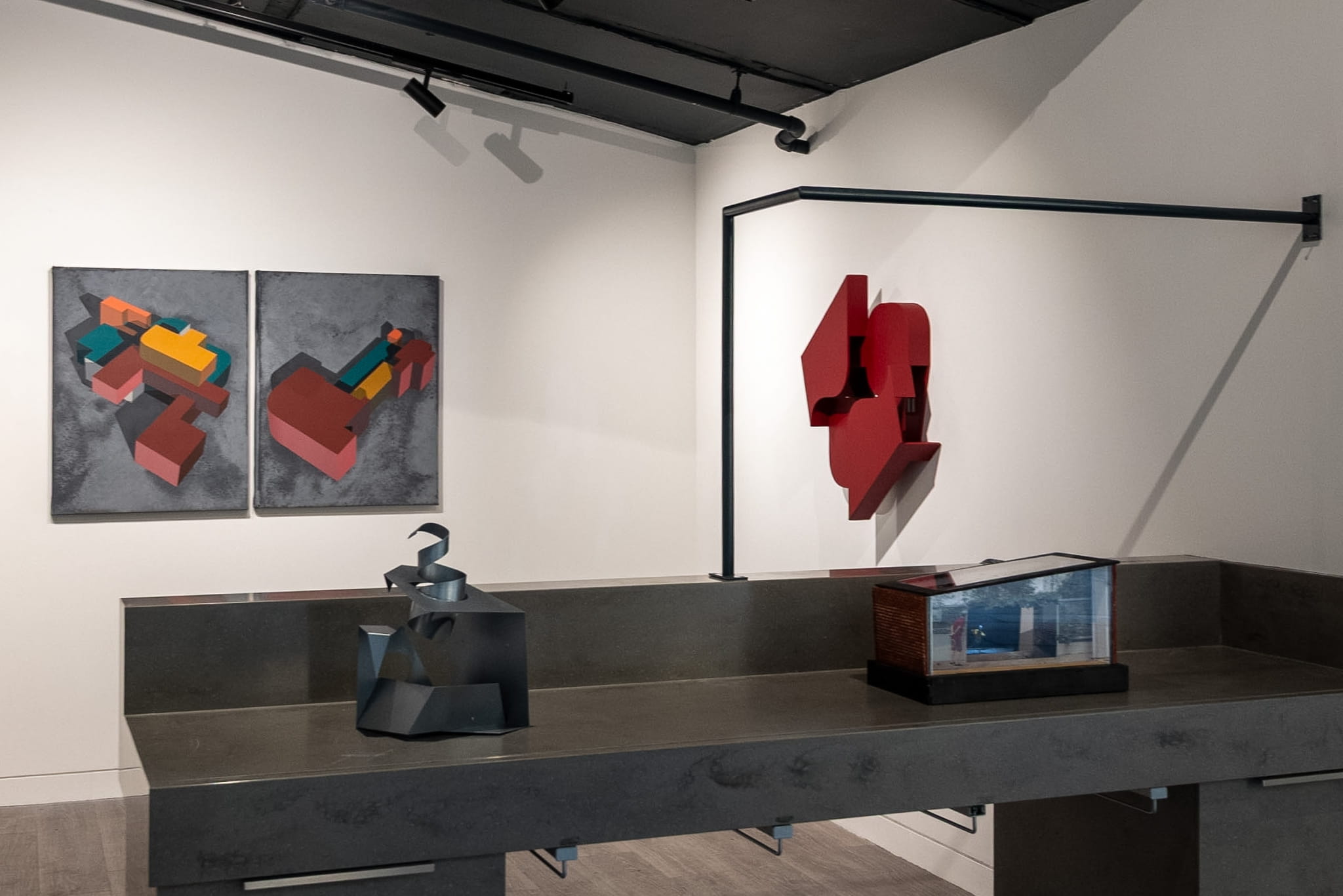
AWDB speaks with Singaporean artist Faris Nakamura on the occasion of ‘Spatial Ghosts’, a group exhibition exploring how memory can remain embedded in the spaces we inhabit. Bringing together five Southeast Asian artists — Bunga Yuridespita (Indonesia), Evi Pangestu (Indonesia), Faris Nakamura (Singapore), Haffendi Anuar (Malaysia), and Joshua Kon (Singapore) — the exhibition considers the different ways artists respond to place, memory, and more.
Nakamura’s sculptural practice draws on architecture to explore these ideas, using geometric structures as a way of giving physical form to experiences that are difficult to hold onto. Following his move from Singapore to London in 2024, ‘Spatial Ghosts’ comes at a period of growing recognition for the artist, including his Runner-up position in the D Contemporary Award 2026. Later this year, Nakamura will continue his London programme with ‘Sequestered Spaces, Fleeting Light’, a duo exhibition with Bunga Yuridespita that expands on their ongoing exchange around space and memory.
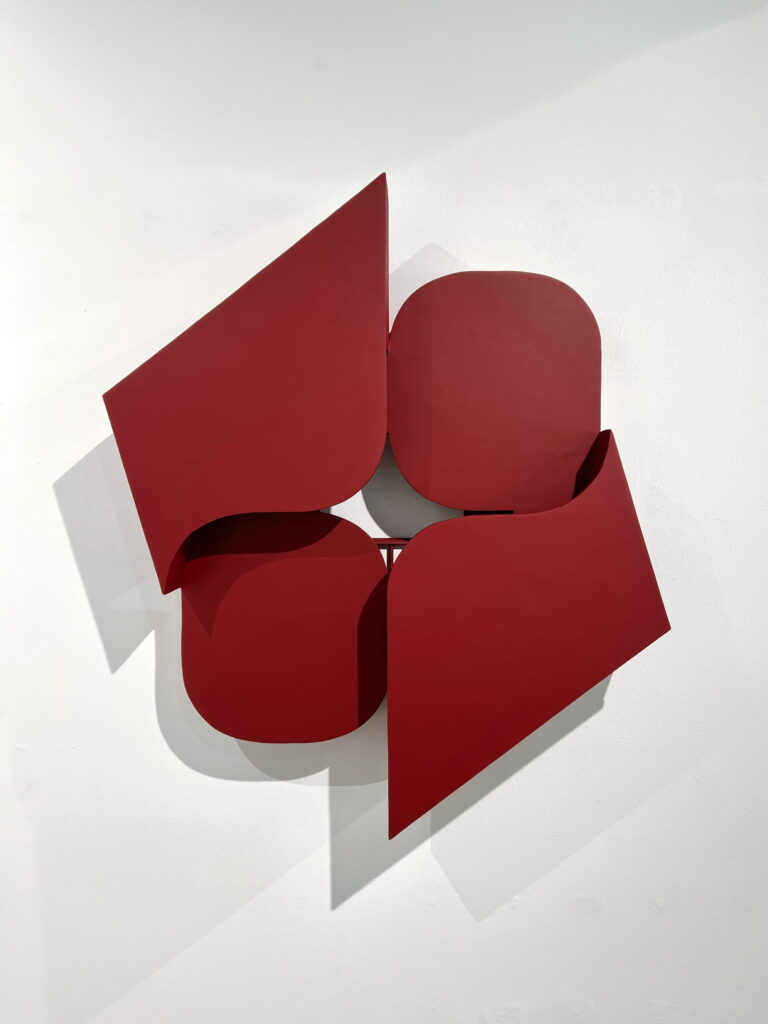
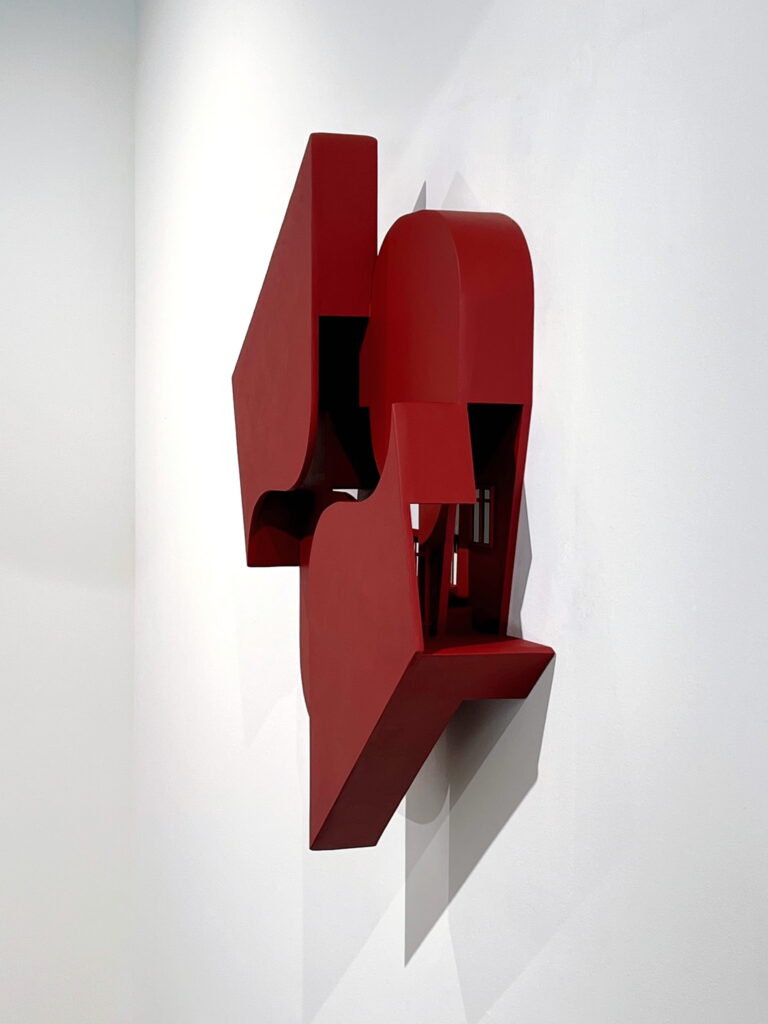
‘Spatial Ghosts’ explores the lingering memories held within the built environment. How do memory and space become intertwined within your practice, and what draws you to geometry as a way of thinking about memory and identity?
For me, memory and space are deeply intertwined because our understanding of a place is never purely physical. Spaces carry traces of the people, histories and experiences that have passed through them, and these traces can continue to shape how we remember and relate to a place long after we have left.
My practice often begins with architecture, but I use these built structures as a way of thinking about identity, belonging and memory. I am interested in how a familiar architectural form can hold something intangible, a feeling of home, displacement, loss, longing, or belonging.
As someone who has moved between places, I am particularly drawn to the idea that a sense of home can exist simultaneously in multiple locations. Memories can make distant places feel present, while familiar spaces can become strange when viewed through time or distance. This tension between presence and absence is something I often explore in my work.
What draws me to geometry is the way it gives me a structure through which I can understand memory and identity. For me, geometry is not only about form, proportion or architectural language; it is also connected to how I have learned to navigate my own emotions and the spaces around me.
I have always been someone who can become a little anxious when waiting for someone I love. I remember, as a child, waiting in a shelter or a particular space for someone to come and pick me up, and that feeling of anticipation has stayed with me. Even as I have grown older, there is still something familiar in waiting to embrace someone I care about. In those moments, I often find myself focusing intensely on the shapes around me to regulate my emotions. It might be a detail in a building, the edge of a wall, a window, the geometry of a structure, or simply the shape created by light and shadow. By concentrating on these forms, I can quiet myself. The shapes become something stable to hold onto while everything else feels uncertain.
Because of this, geometric forms have become deeply tied to my memories. A particular angle, line, shadow, or architectural detail can become associated with a person, a place, or a moment in my life. These shapes become almost like emotional anchors. They carry the memory of the people I have shared my time and my heart with, and the moments we experienced together.
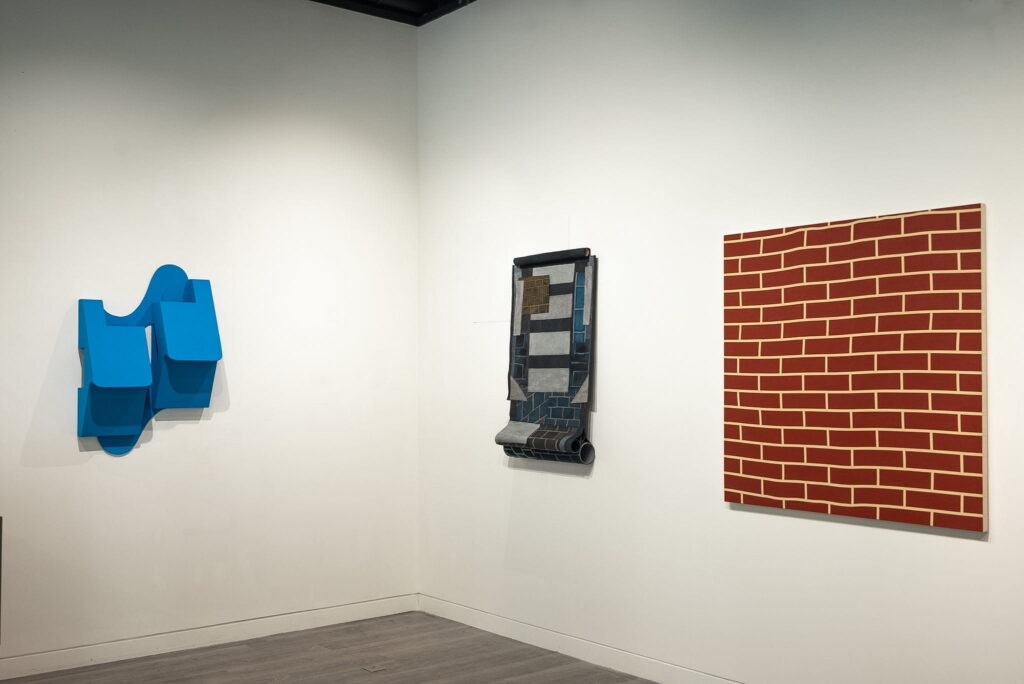
Your works in the exhibition evoke ideas and feelings of shelter. What interests you about shelter as a form?
I am interested in shelter as both a physical structure and an emotional condition. For me, shelter is not simply about protection from the outside world, it is also about the spaces we construct, inhabit, and carry with us in order to feel that we belong somewhere. I think about the architecture of home, but also about the body, memory, family, and the idea of safety.
Having grown up in Singapore and now living in London, I have become increasingly aware of how shelter can be connected to displacement and belonging. A home can be a place of comfort, but it can also hold memories of absence. This tension interests me. The idea that a structure can protect us while simultaneously reminding us of what has been lost, left behind, or changed.
I am drawn to thresholds, façades, walls, canopies, and structures that suggest enclosure without completely closing themselves off. I want the works to feel as though they are offering a space of refuge, while also leaving room for uncertainty and vulnerability.
Shelter is therefore quite intimate for me. It is not necessarily a grand or permanent structure. It can be something fragile, improvised, or temporary like a shadow, an architectural fragment, a memory, or even the body itself. I am interested in that space between being protected and being exposed, and in how we continually make and remake our own forms of shelter as we move through different places and stages of our lives.
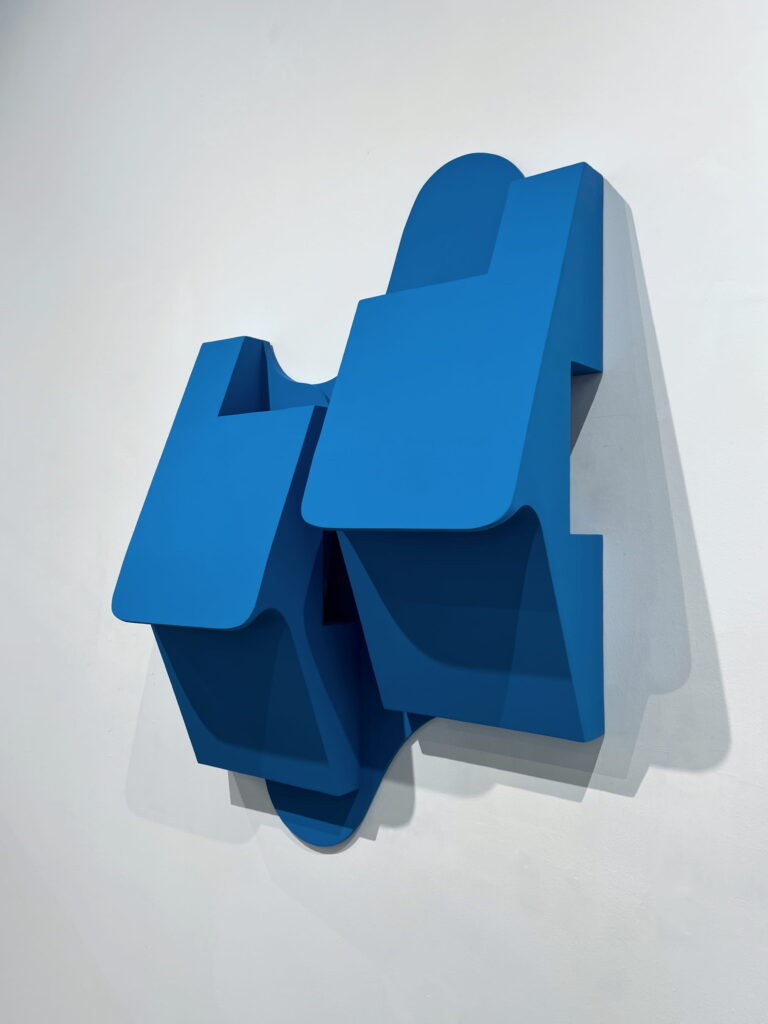
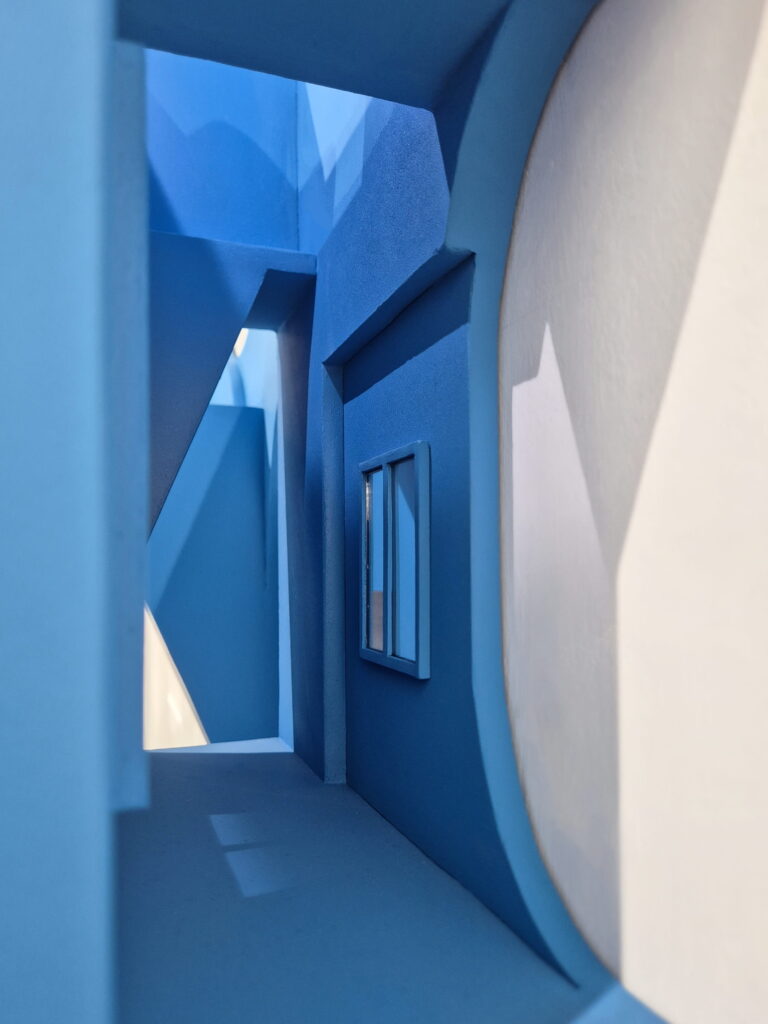
‘Spatial Ghosts’ brings together five Southeast Asian artists whose practices each approach the theme of retained memory differently. How do you see your works entering into conversation with the works of the other artists?
I think my works enter into conversation with the other artists through their physical relationship to space. As perhaps the most sculptural works in the exhibition, they emphasise the idea of space itself and the negotiations that constantly happen between our bodies, objects, and the environments we occupy. Rather than simply looking at my works as images, I want viewers to experience them in a similar way to how they experience a space: by moving around them, looking through and around them, noticing their scale, openings, boundaries, and relationship to their own bodies.
I also find it interesting that my sculptures almost appear like three-dimensional or sculptural versions of some of the other artists’ works. There are shared forms, structures, and spatial qualities, but they emerge from very different experiences and attachments to space. I think that difference is important. We may all be responding to ideas of memory and place, but the spaces we remember, inhabit, or feel attached to are never experienced in exactly the same way.
For me, sculpture becomes a way of making those negotiations visible and physical. The work can suggest shelter, a boundary, an enclosure, or a place of belonging, but it can also create moments of uncertainty about where the viewer stands in relation to it. In that sense, I hope my works contribute to the exhibition not only as objects that hold memory, but as spaces that the viewer has to physically negotiate themselves.
I think this creates an interesting conversation between all five artists as we are each carrying different relationships to space, and those differences become another way of understanding how memory is retained.
Later this year you’ll present ‘Sequestered Spaces, Fleeting Light’ with Bunga Yuridespita in London. How does it feel to be introducing your practice to a new audience, and how has working alongside Bunga evolved beyond your dialogue in ‘Spatial Ghosts’?
I’m really excited about ‘Sequestered Spaces, Fleeting Light’, particularly because it feels like an important moment in my practice. It is the first exhibition here that feels like a major spotlight on my practice. As a duo exhibition, there is more space for my work to be seen and considered as a body of work, and that feels particularly meaningful after spending the last year establishing myself within a new artistic landscape.
I also feel very fortunate that the exhibition comes at a time when I am already building momentum in London. Through an award show that I was part of, and the two Hypha shows I am currently showing in, I have been able to meet new audiences, make new connections and introduce my work to people who have not encountered my practice before. ‘Sequestered Spaces, Fleeting Light’ gives me the privilege of continuing that momentum, to show a lot more to those audiences and reach many new ones as well.
Working alongside Bunga has also evolved significantly since ‘Spatial Ghosts’. Both our practices are strong in their own right, and what is interesting now is that we are not trying to make the work fit together. Instead, we are extending our strengths into each other’s practices, and allowing elements of them to naturally meld. Bunga has a strong experience with video and performance, while my practice is deeply rooted in sculpture and spatial installation. That creates opportunities for us to push beyond what we might normally do individually and to think about how our respective ways of working can activate each other.
There is something exciting about seeing where that exchange takes us. My sculptural installations can create a physical and spatial condition for Bunga’s moving images to inhabit, while her approach to video encourages me to think about movement, duration, and perception in ways that extend beyond the object. At the same time, we both have a strong interest in space, memory, and the emotional traces that environments can hold, so there is already a shared language between us.
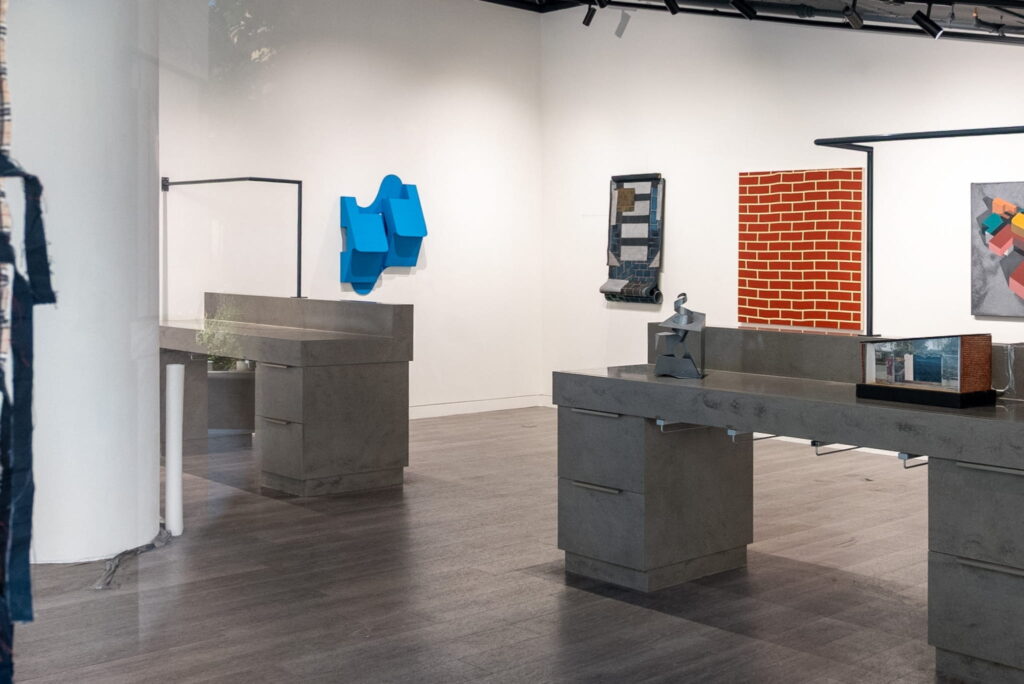
Congratulations on being the Runner-up for the D Contemporary Award 2026. What does this recognition mean to you at this stage in your career?
Being named Runner-up for the D Contemporary Award 2026 means a great deal to me, particularly because of where I am in my journey as an artist. I have had the privilege of building a strong foundation in Singapore and across Asia, where my work has been exhibited and recognised, and where I have also received awards and opportunities that have affirmed my practice. I had a sense of where I stood within that art community and understood the conversations that my work was part of.
Moving to London in 2024, however, felt very different. In many ways, I felt like I had to start from the ground up again. I was entering a new art world, building new relationships, finding new audiences and trying to understand where my practice might sit within a much larger and unfamiliar landscape. I wasn’t certain about my place here, or whether the recognition and momentum I had built in Singapore and Asia would translate into this new environment.
My first year in London was also slower than I had hoped, and that inevitably made me question myself a little. There were moments when I wondered whether I had made the right move, whether my work would resonate here, and whether I could find the same sense of belonging within the art community that I had experienced back home.
That is why this recognition came at a particularly meaningful time for me. It arrived when I needed that reminder the most. Being awarded the Runner-up reassured me that the work I have spent years developing is still communicating, even outside the context I am familiar with. It reminded me that I haven’t lost what I have built, I am simply building upon it in a new place.
The award also gives me the opportunity to work and exhibit through D Contemporary Gallery. Having an established gallery believe in your practice and represent your work is incredibly meaningful, especially when you are still establishing yourself in a new country.
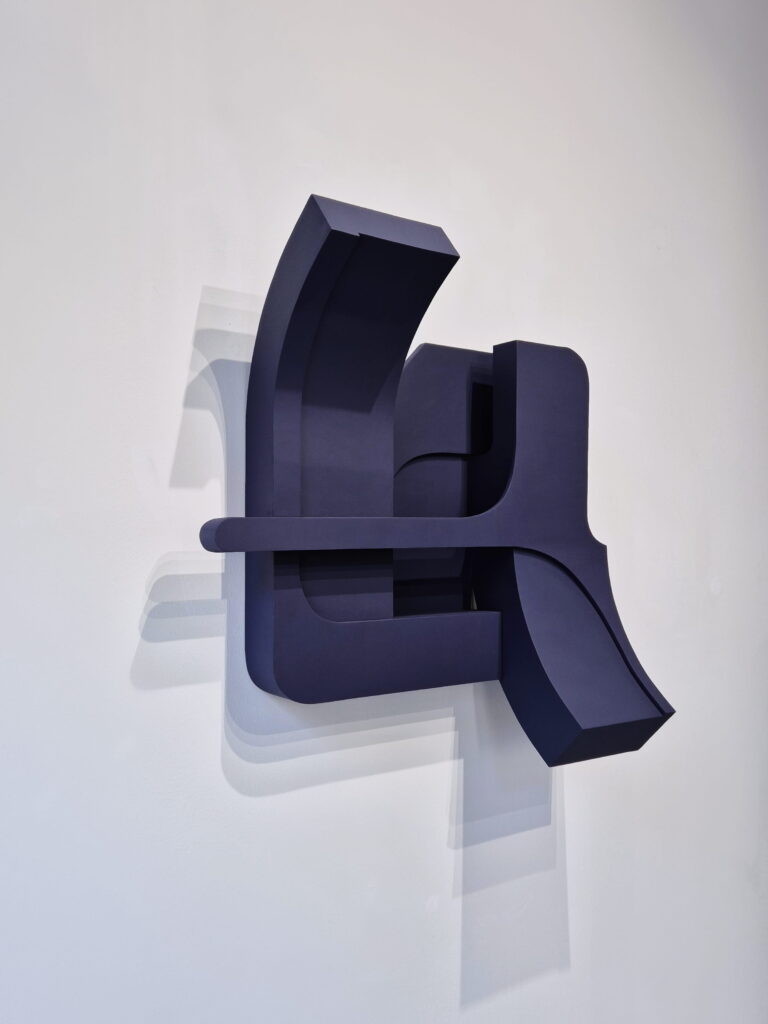
As your practice continues to expand, what ideas are you hoping to explore next?
In terms of visual language, I am returning to some of the earlier works and the qualities that I have become known for, but with a greater sense of openness. I am interested in creating more breathing spaces within the work, spaces that feel less enclosed and more expansive, which reflects where I am in my own life.
I also want to introduce softer, more organic forms, open walkways and more relaxed spatial relationships. These shifts speak to my evolving experience of living in London, while still carrying the memories, structures and experiences that have shaped me. I see this as a way of balancing memory with a newfound sense of freedom, and allowing my relationship with space to become less constrained and more expansive.
Following my experience working with video for my duo exhibition with Bunga Yuridespita, I am also interested in experimenting further with projection. I want to push the role of light and shadow within my sculptures, perhaps introducing movement and changing atmospheres. It could allow the works to shift over time, rather than existing as entirely static objects, and create another way for viewers to experience and negotiate the spaces within them.
‘Spatial Ghosts ’ is on view at Hypha Studios Gallery 3, London, UK, until 29 August 2026. For more information, please click here. ‘Sequestered Spaces, Fleeting Light’ opens at The Handbag Factory, London, UK, on 30 September 2026.
The D Contemporary Award is an international open call and art prize hosted by D Contemporary gallery in London, supporting emerging and early mid-career artists worldwide. For more information, please click here.
INTERVIEW COURTESY OF ART WORLD DATABASE AND FARIS NAKAMURA, AUGUST 2026