

AWDB speaks with Singaporean artist Lavender Chang on the occasion of ‘Mirrorball: Reflections on Portraiture’ at FOST Gallery. Bringing together artists working across photography, painting, and objects, the exhibition considers portraiture as a field of presence rather than likeness.
Chang’s practice is grounded in close observation and duration, using long exposure and process-based methods to explore how identity is shaped through everyday roles and accumulated experience. As we move between discussing earlier works and more recent projects, Lavender explores how she allows memory and perception to unfold over time. In ‘Mirrorball’, her work positions portraiture as a space for reflection, not of faces, but of the quiet structures that organise how we see ourselves and one another.
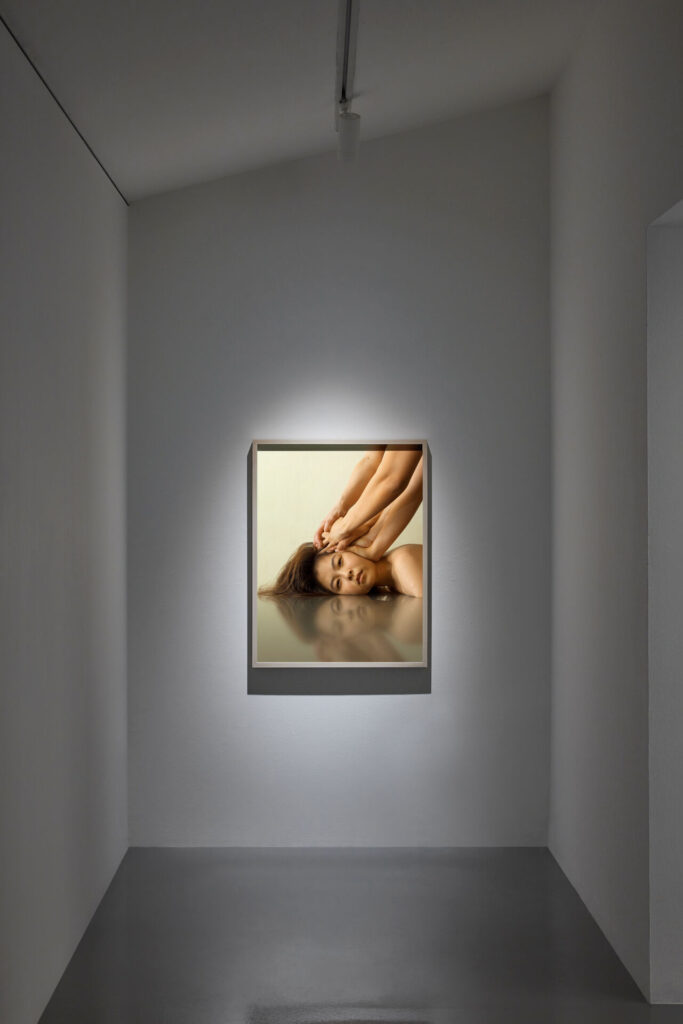
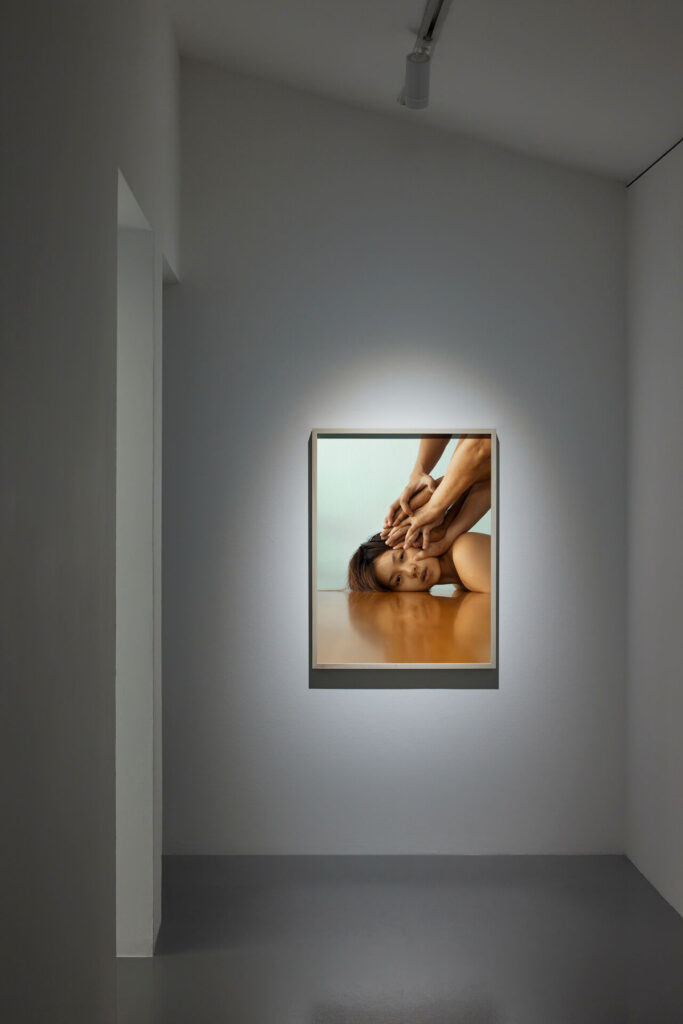
The exhibition frames portraiture as a space for experimentation. How does ‘Eldest Daughter #1’ expand what a portrait can be?
I do not see portraiture as merely a task of capturing the face. When we do not know the subject, resemblance becomes secondary. What matters is recognition: what we feel, what we see of ourselves, what the image invites us to consider.
As an eldest daughter, I grew up with an unspoken sense of responsibility – the feeling of having to hold things together in the family. Over time, I realised this was not mine alone. Many eldest children, especially daughters, inherit this weight and carry it quietly. The work is not about one individual; it reflects a position within a family, a structure. The hands pressing on her head are physical, but they also embody invisible pressures – expectation, duty, love, obligation.
Viewers bring their own readings. Some see the pressures placed on women. Others recognise their experience as the eldest child. Some begin to question whether these roles are fixed or shifting.
If the work expands portraiture, it is because the portrait no longer describes who she is. It reveals what she carries.
Your ‘Eldest Daughter’ series reflects familial structures and expectations placed on women. How do you see these dynamics resonating within broader Southeast Asian contexts today?
Across Southeast Asia, women are studying in greater numbers than ever before. In many countries, they now fill more seats in universities than men. Education can shift the ground beneath a life. It makes it possible to move, to work, to choose differently. But it does not untie the threads of what came before. The roles we inherit do not vanish. They settle quietly beside the new ones.
The Eldest Daughter lives in that in-between space. She grows inside family structures that are still deeply cherished across the region, including filial duty, shared responsibility, and the quiet work of holding everyone together, even as she tries to make room for herself. I have come to feel that caring for others cannot come from emptiness. To give fully, one must first learn how to stand, steady and whole, within oneself.
Since beginning this series, my understanding has evolved alongside the women I portray. They have moved through life stages, from daughter to partner, to mother, to professional, and the weight they carry shifts form rather than disappears. Obligation transforms into leadership; pressure becomes endurance.
In Southeast Asian art history, women have often been pictured as bearers of labour, tradition, and continuity: from Anita Magsaysay-Ho’s rhythmic communities of working women to Georgette Chen’s modern subjects negotiating identity and place. I see the Eldest Daughter series as part of this lineage, but no longer only sustaining the household quietly.
Now I imagine these women as mountains — not crushed by weight, but becoming terrain. They are no longer merely supporting the family; they are the ground upon which it stands.
Your practice is rooted in close observation of everyday life. What does this process of ‘looking closely’ mean to you as an artistic method?
Close observation, for me, is a way of slowing down. The people, objects, and moments in my work come from everyday life, but they are not simply recorded as they appear. Through conceptualising, reframing, and photographing, I try to move beyond surface vision and to uncover what lies beneath the familiar.
Looking closely is not only about detail; it is about perspective. The ordinary world reveals itself differently when we shift our position, physically or imaginatively. In ‘Don’t Walk In Front of Me, I May Not Follow’, the long exposure photographs are taken from a cat’s point of view. When viewers realise this, familiar spaces suddenly feel altered and strange.
This process reminds me that perception is never fixed. By adjusting how we look, we begin to see that the everyday is layered, contingent, and full of quiet possibility.
Your work featured in ‘Mirrorball’ is from over ten years ago, yet still feels very relevant. From earlier projects to recent ones, how do you see your practice shifting?
Process has always been central to my practice. I think of it as a kind of performance: I establish certain rules or conditions, but I do not interfere with what unfolds within them. The unpredictability is essential.
In earlier works, I could still anticipate the shape of the final image while shooting. Over time, however, I have become more comfortable with uncertainty. When translating something intangible, like duration, movement, or accumulation, into a photograph, the work often moves in directions I did not foresee. I now allow that drift to guide the outcome more fully.
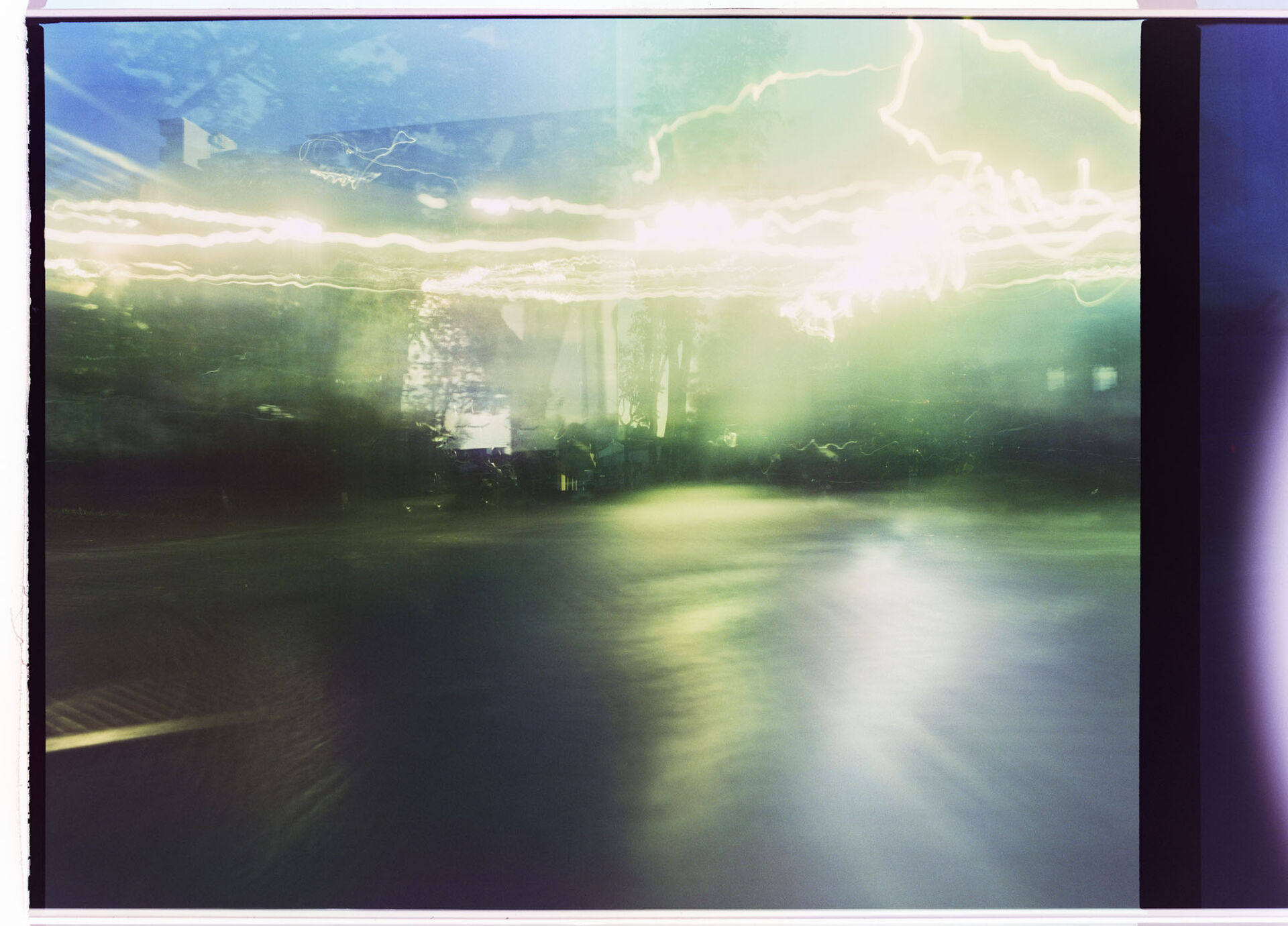
In ‘Floating Rays of the Wanderer’, viewers may recognise fragments of familiar environments, yet they appear displaced or reconfigured. People naturally try to make sense of these elements through their own experiences, but the work resists a single reading.
If my practice has shifted, it is toward greater openness, less control, more trust in the process, and a deeper acceptance that meaning emerges between the work and the viewer rather than being fixed in advance.
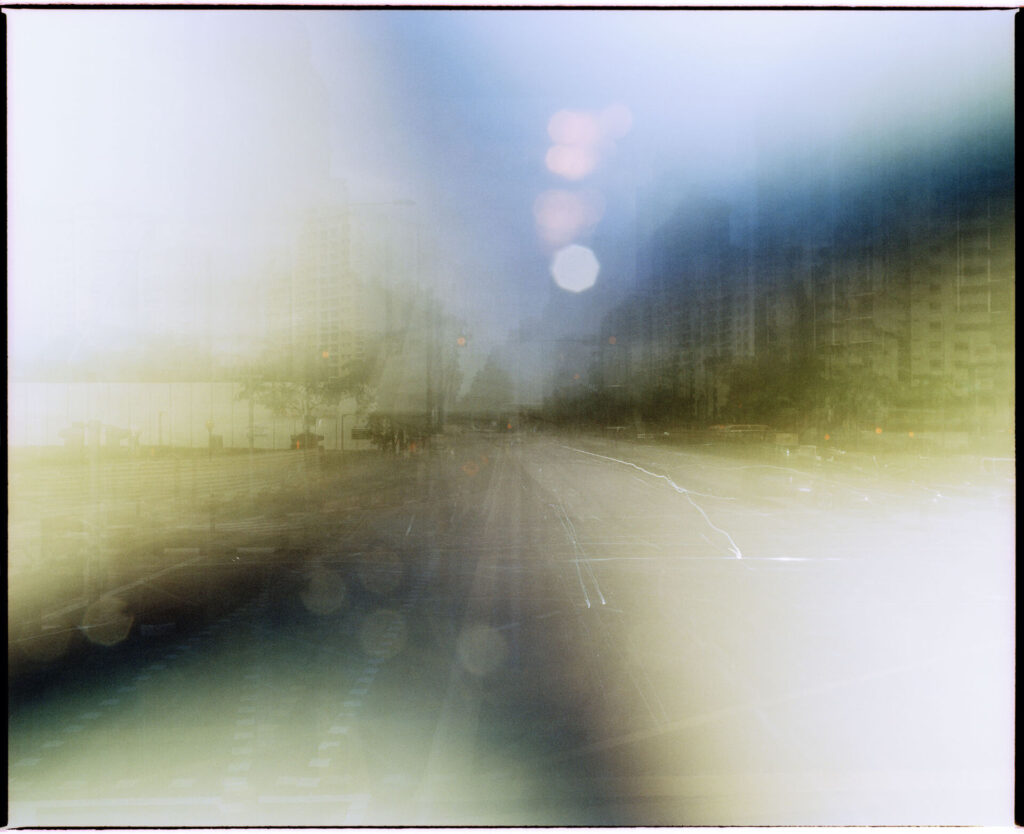
Your more recent, long exposure images, as in your ‘The Temporary We’ series, seem less about freezing a moment and more about extending it. How does this technique relate to your interest in memory?
My recent long-exposure works are less about freezing a moment than about allowing it to unfold. I am interested in the passage of time – in how an instant is never singular, but layered with movement, presence, and disappearance. Photography is often associated with preservation, yet what I want to preserve is not a fixed second, but the fragile continuity of experience.
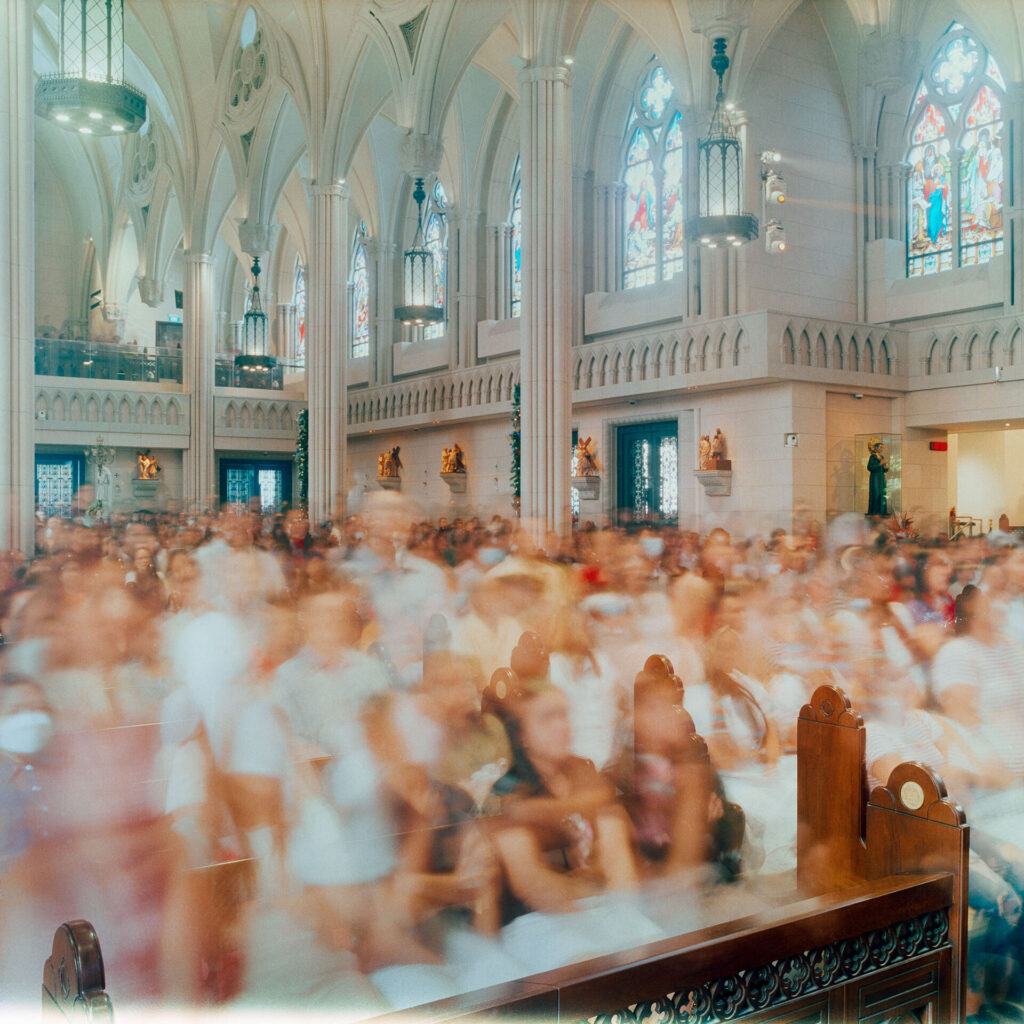
In ‘The Temporary We’, I reflect on the uniqueness of encounters and partings. People gather for a shared purpose, inhabit the same space, generate a temporary energy, and then disperse. Long exposure allows me to stretch these encounters beyond their immediate duration, rendering our shared presence as something fluid and interwoven. The image becomes less a record of individuals than a trace of collective consciousness.
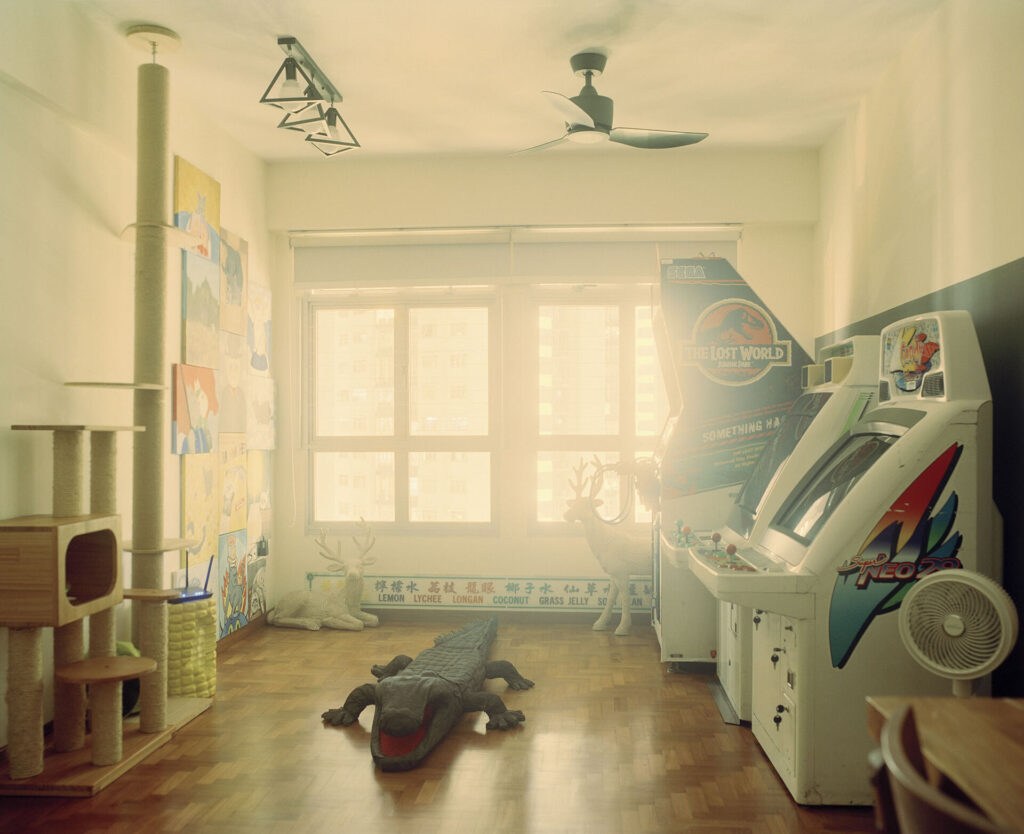
Memory itself is unstable. It fades, shifts, and reforms, yet it also sustains a sense of familiarity. In ‘Silent Knight’, the slow accumulation of light and shadow within domestic spaces produces images that feel both precise and dreamlike. Details that usually escape attention begin to surface. Through duration, the intangible – atmosphere, energy, passing time – becomes visible.
For me, long exposure is not simply a technique. It is a way of acknowledging that memory is never still; it is always in the process of becoming.
In a time when images of faces circulate endlessly and instantly, what responsibility does portraiture still hold for you as an artist?
Portraiture cannot simply be about appearance. The image of a face has become immediate, abundant, and easily forgotten. What remains urgent, for me, is attention.
My responsibility as an artist to counter this rate of image consumption is to decelerate and allow space for complexity. A portrait should not flatten a person into a symbol or a passing impression. It should hold contradiction, vulnerability, and be of substance.
I am less interested in capturing likeness than in creating a space for encounter. When a viewer pauses, reflects, and recognises something of themselves or of another within the work, a quiet dialogue begins. And it is in this exchange that portraiture regains its depth.
‘Mirrorball: Reflections on Portraiture’ is on view at FOST Gallery, Singapore until 14 March 2026. For more information, please click here.
INTERVIEW COURTESY OF ART WORLD DATABASE AND LAVENDER CHANG, FEBRUARY 2026