
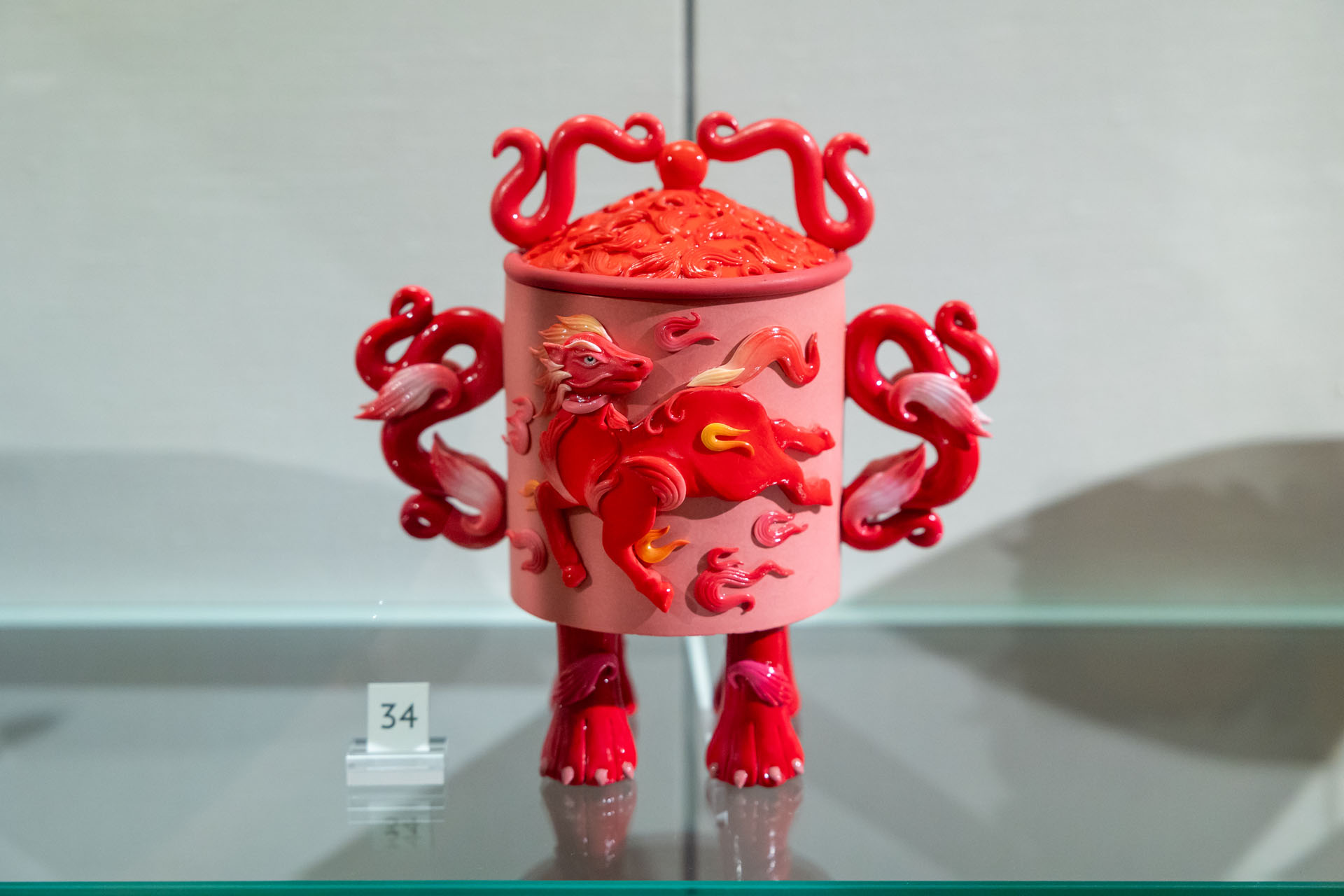
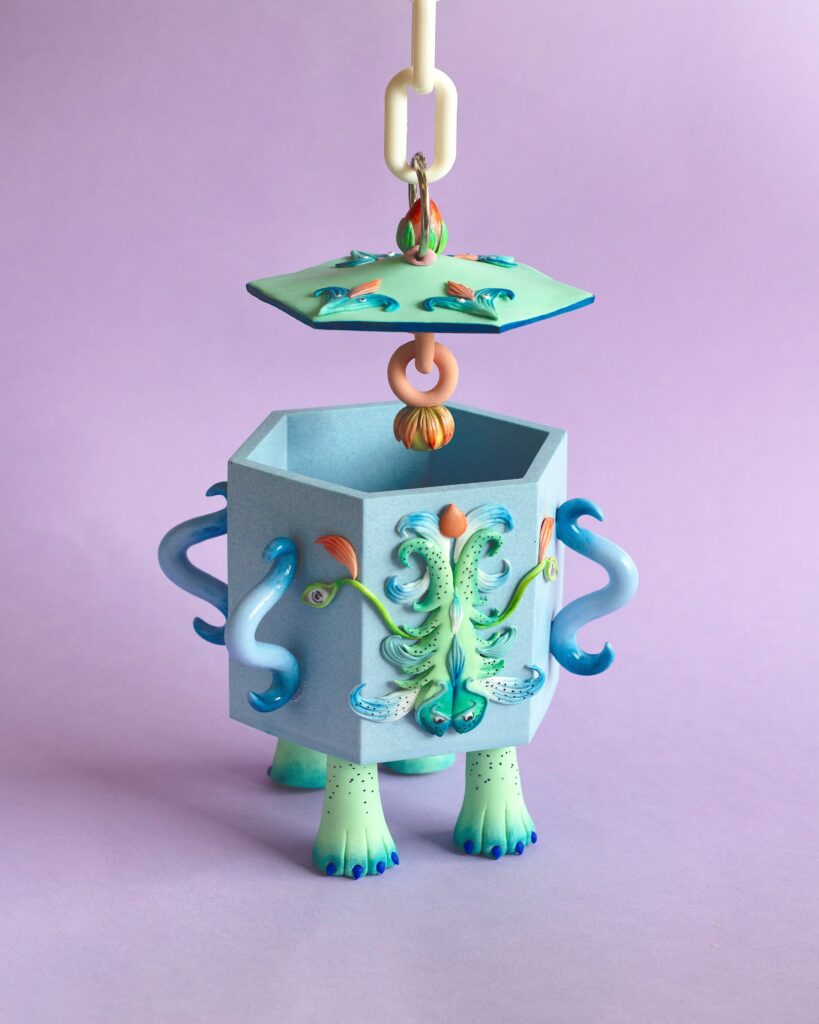
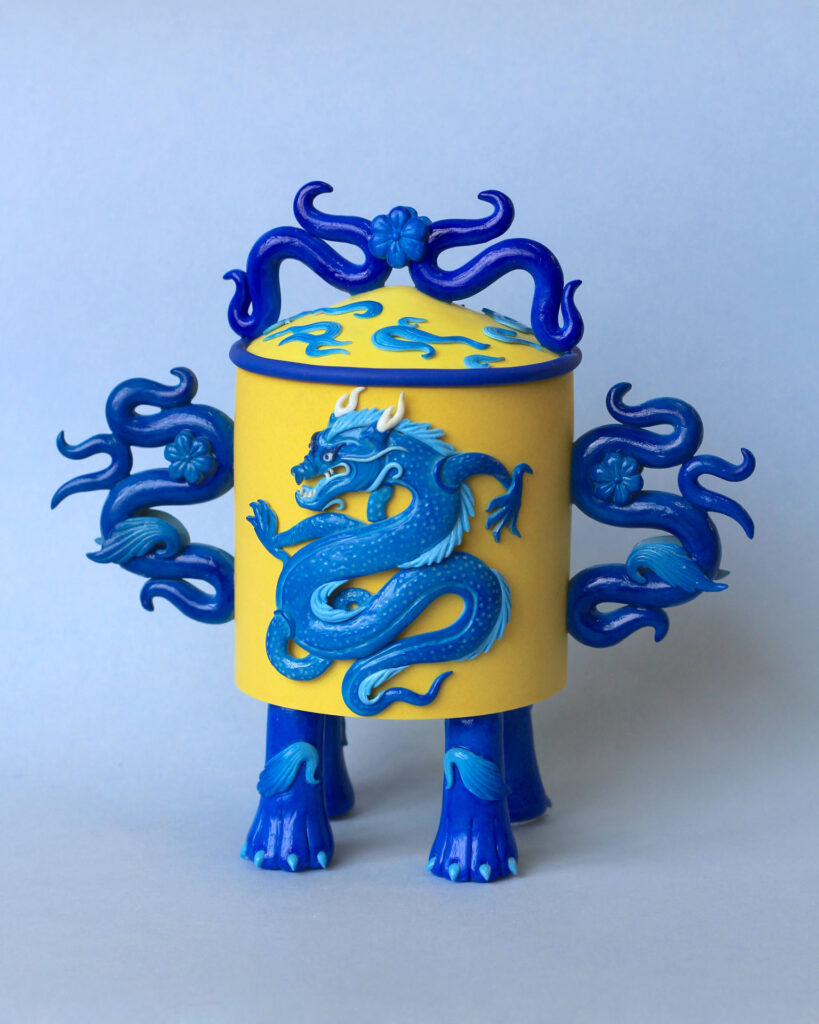
AWDB speaks with artist Hannah Lim and curator Eden Coffey-Cockram on the occasion of ‘Reimaginings’ at the Museum of East Asian Art in Bath, U.K. Lim’s first solo museum exhibition brings together brightly coloured ceramic and sculptural works developed in response to objects from the museum’s collection, creating direct visual dialogues between contemporary artworks and historical artefacts.
The exhibition emerges from Lim’s ongoing interest in cultural exchange and the histories embedded within decorative forms. Responding directly to objects from the collection, she draws on motifs associated with Chinese ceramics and visual culture while revisiting the complex legacy of chinoiserie through the lens of her mixed British and Chinese-Singaporean heritage. Alongside the exhibition, Coffey-Cockram reflects on how artist-led collaborations can open new readings of museum collections, positioning contemporary practice as part of an ongoing conversation rather than a separate field of inquiry.
Hannah Lim
How did responding to the historical objects and artworks of the gallery’s existing collection shape your creative process?
The museum’s collection strongly shaped the works that I produced for ‘Reimaginings’. I was keen, when we began developing this show, that a selection of the works I produced would have a direct reference to specific objects from the collection.
To me what felt most enriching about this opportunity to collaborate with MEAA was being able to handle, research and then respond to specific objects that I found most intriguing. I find I often produce the work that I’m most happy with when I’m working directly in response to something – an object, a story, a decorative motif.
Having a curated selection of objects to reference throughout my making process meant that a number of new processes and avenues of research became relevant in the production of the works for the show. This informed both the colours and form of the works as well as my choices to include particular motifs. Cultural exchange sits at the centre of many of the works in ‘Reimaginings’.
Could you talk us through some of the stories or mythological references that particularly stayed with you while making this exhibition?
All of the objects I selected from the collection had such unique and intriguing stories, many related to Chinese mythology!
I think I became quite enamoured with a few of the works in the museum featuring bat motifs. Whilst not mythological creatures, there is something magical in the way that bats are often depicted in Chinese ceramics, often bright orange with curved intricate wings. It’s been interesting through this show to learn more about their symbolism and cultural significance. They’re often seen as symbols of prosperity and happiness in Chinese culture – maybe quite different to the symbolic identity of bats here in the UK. Its pronunciation also mirrors that of “blessing” in Chinese, making it a popular decorative element.
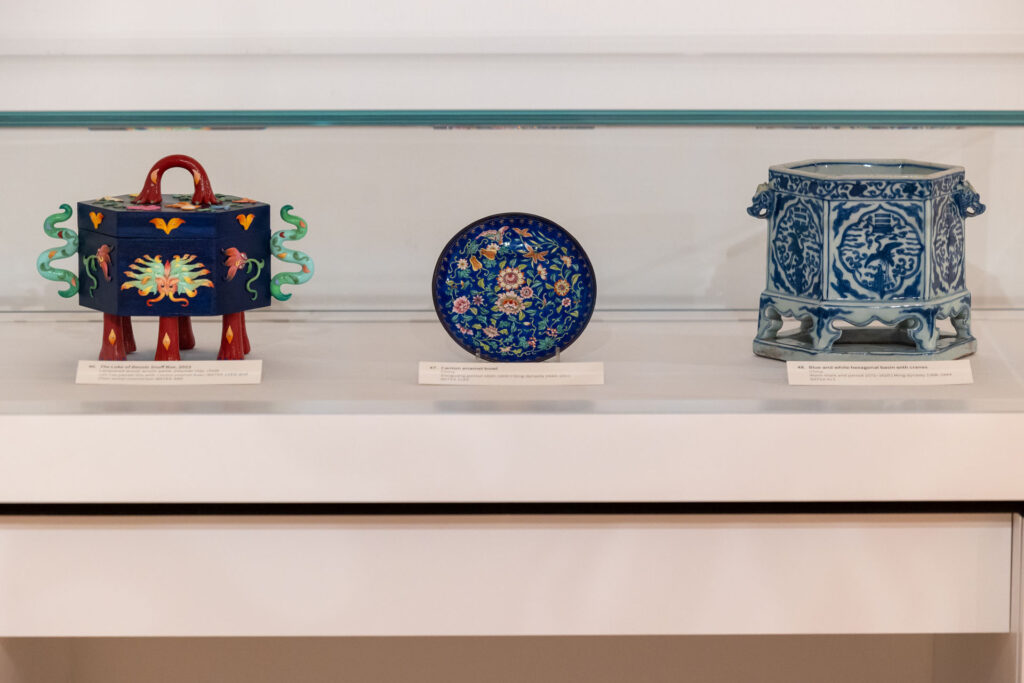
What interests you about engaging with chinoiserie in your work, and how do you approach its histories today?
I started looking into Chinoiserie during my degree. I’d been quite interested in the style as it encapsulated these two parts of my heritage in such a visually exuberant way, but I was also acutely aware that it existed as a result of colonialism and imperialism. I was also particularly interested in it as a form of appropriation – during my degree I had been interested in examining forms of cultural appropriation.
In my own practice and particularly when I started exploring my heritage in my work, I was quite conscious of representing elements of my heritage accurately and appropriately. I think these considerations around my own work pushed me to be interested in exploring and examining more historic forms of appropriation.
I’ve been interested in this idea of reimagining Chinoiserie, rather than totally rejecting it. I wanted to use my work as an entry point into understanding and learning about the history of it, but also as a way for me to engage more deeply with my mixed heritage. I’m not trying to recreate Chinoiserie, but I’m interested in using my work, and using my reinterpretation of elements of its aesthetics as a way to educate people about it and examine their own thoughts around appropriation.
For me, it’s also really important and interesting that the different cultural motifs referenced in my work are highlighted and their cultural significance and origins are made clear.
Eden Coffey-Cockram
This exhibition is, for the museum, a move towards more contemporary programming. How do you foresee the museum expanding or rethinking its relationship to contemporary art through projects like ‘Reimaginings’?
Since our 30th anniversary in 2023, we’ve been thinking about the stories we tell at MEAA and, importantly, who we work with to tell them. Collaborating with East and Southeast Asian artists and embracing contemporary practices has been an important part of this journey. Rather than seeing contemporary work and historic objects as separate, what we’re trying to show is that they are both part of an ongoing conversation around art, design, and cultural expression.
Moving forward, we want to build on the work of ‘Reimaginings’ and continue to create opportunities for artists, creatives, and community groups to engage with and respond to the Museum’s collection. It feels like the start of a new chapter at MEAA, and we’re excited to discover what new stories we can continue to tell through these collaborations.
How did you approach pairing Hannah Lim’s works with the museum’s existing collection, and what kinds of interactions emerged between them?
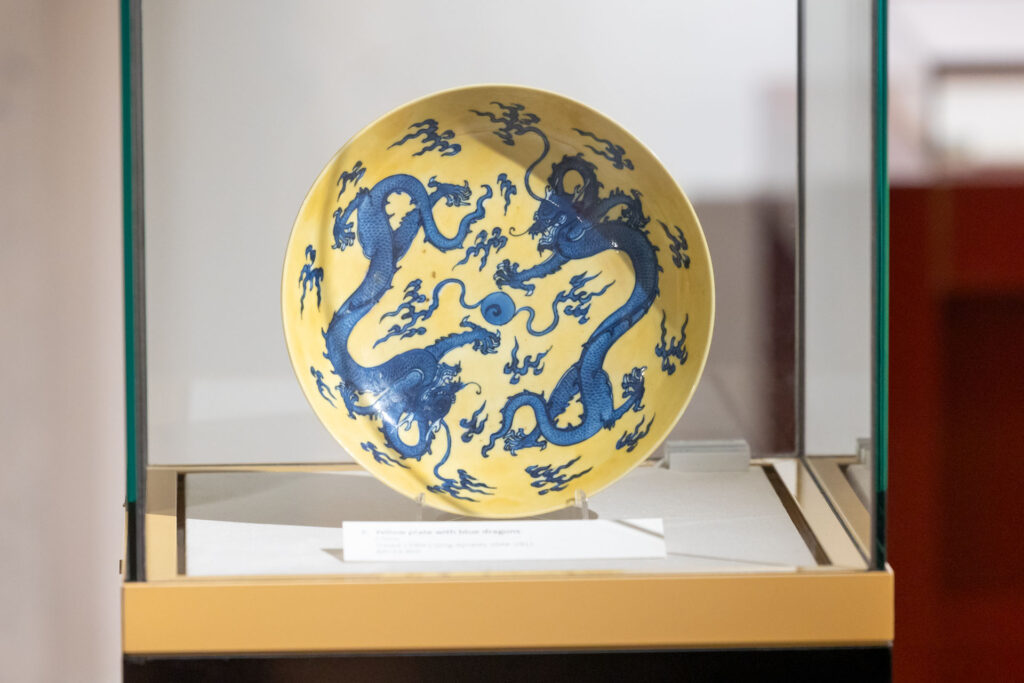
I jump at the opportunity to co-curate object displays, as each collaborator brings a new perspective, and I inevitably notice details in the collection that I’ve never seen before. An important part of this process was inviting Hannah in to handle the objects, as it’s one of the best ways to understand how a collaborator responds to the collection and which objects they are instinctively drawn to. We brought out many objects and experimented with different pairings and layouts throughout the curatorial process, but there is a magic moment that happens when an object and artwork pairing suddenly clicks into place.
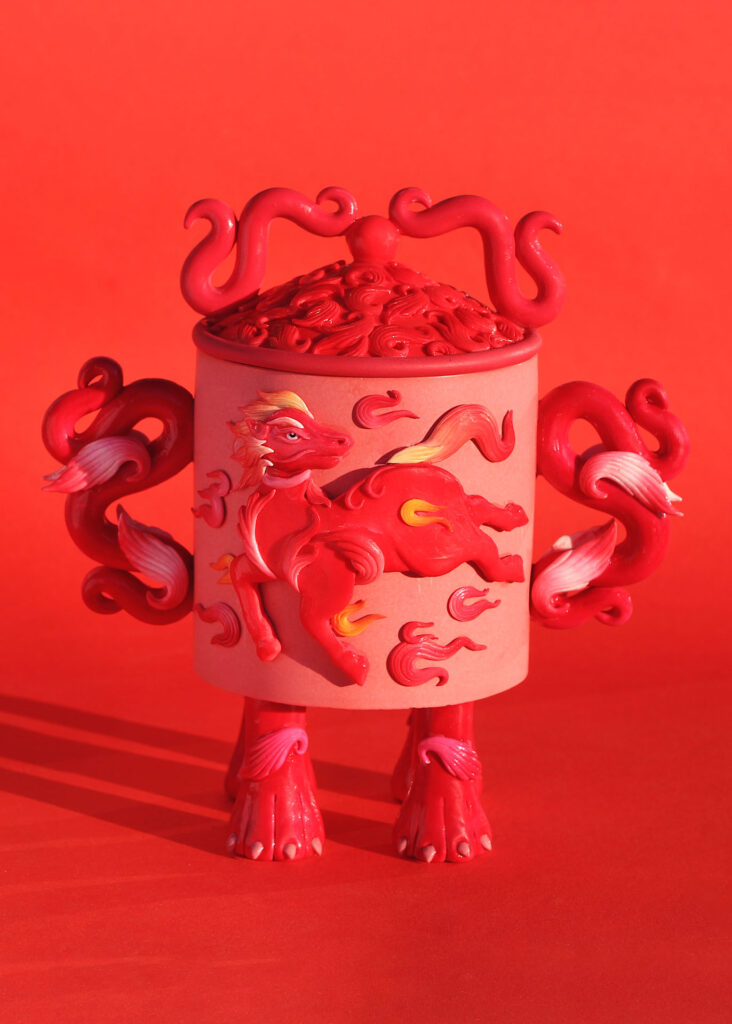
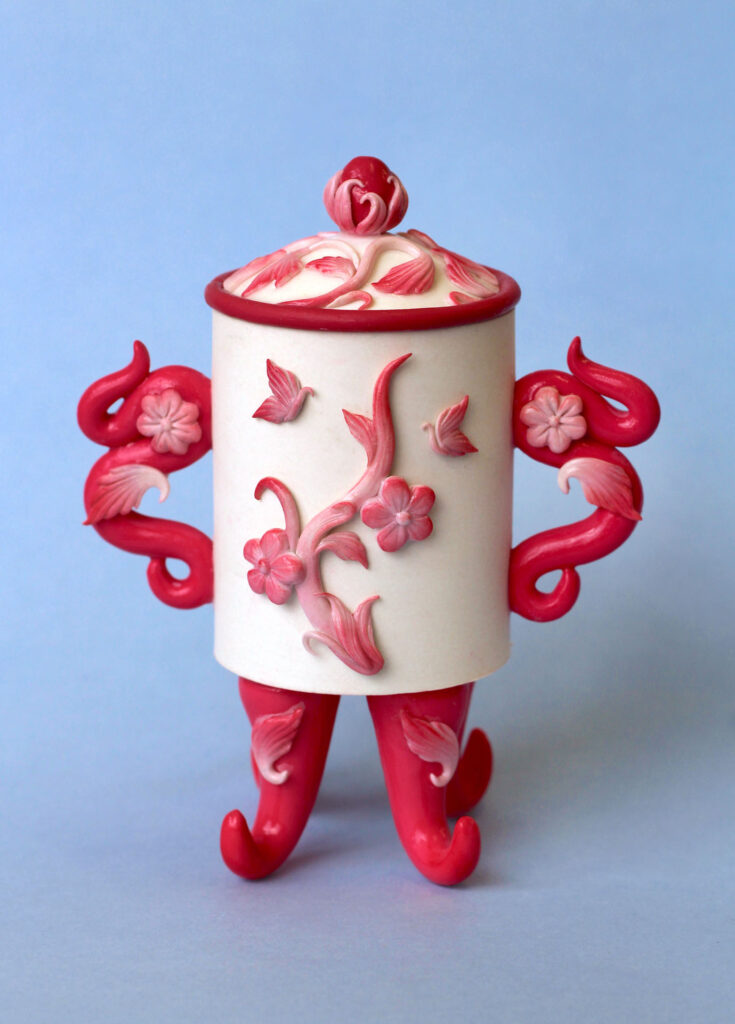
We had so many of these moments throughout the development of ‘Reimaginings’, pairing artworks and objects through shared colours, patterns, motifs, and forms. Now that the exhibition is open, I get the pleasure of watching visitors interact with the exhibition, notice these details, slow down, and look more closely. It’s a testament to Hannah’s research-driven practice and the clarity of her visual language that her works remain distinctly her own yet still feel completely at home within the Museum’s collection.
What does ‘reimagining’ mean to you within the context of this exhibition?
For me, to reimagine is to shift your perspective and open yourself up to new ways of seeing and working. As someone who works with the collection every day, ‘Reimaginings’ has allowed me to be surprised by our objects again, to see them differently, and to discover new ways of relating to them. It’s inspiring to see a body of work that embodies the playfulness and creativity of reimagining, drawing inspiration from multiple reference points while remaining culturally sensitive.
Beyond the exhibition itself, I hope the legacy of Hannah’s playful and considered approach will continue to influence how we work at MEAA. Through collaborations with artists and community-led organisations, we want to invite new perspectives into the building that encourage us to think differently and tell new stories about the collection.
‘Reimaginings’ is on view at The Museum of East Asian Art, Bath, U.K. until 14 November 2026. For more information, please click here.
INTERVIEW COURTESY OF ART WORLD DATABASE, HANNAH LIM, AND EDEN COFFEY-COCKRAM, MAY 2026