
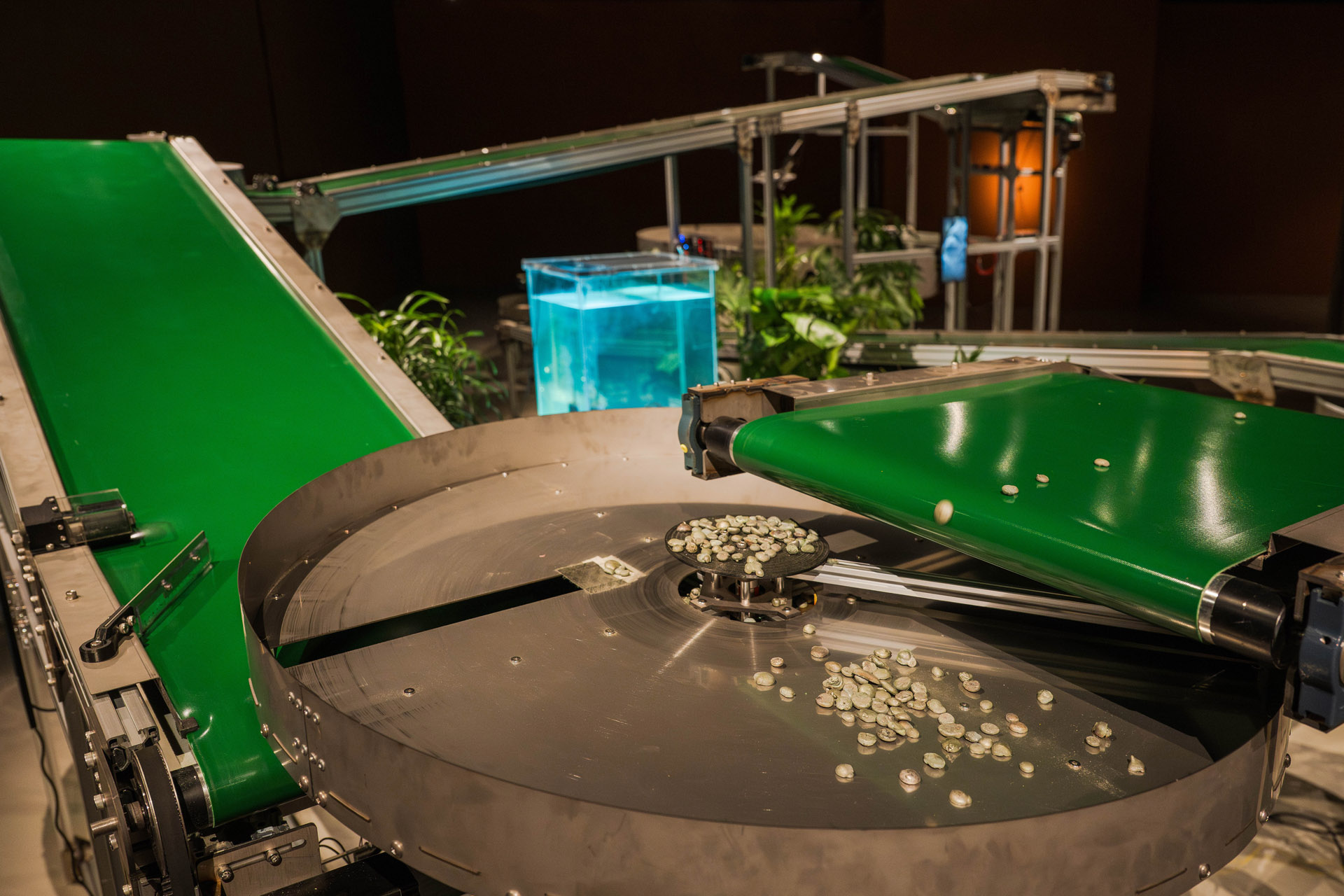
AWDB speaks with Indonesian artist Bagus Pandega on the occasion of ‘Nafasan Bumi ~ An Endless Harvest’ at the Singapore Art Museum, presented as part of its ‘Material Intelligence’ series. Working with kinetic systems that incorporate industrial materials and nature, Pandega examines how extraction, labour, and technology operate within larger ecological and economic networks.
Across installations that unfold over time, materials are the driving force that create change. Drawing on contexts in Indonesia, his practice reflects on how colonial legacies persist within contemporary systems of production, where resources circulate globally while their effects remain local.
This exhibition is part of SAM’s ‘Material Intelligence’ series. How does your practice and the materials you work with respond to this idea?
For me, materials are never neutral. They already carry histories, processes, and consequences before entering the exhibition space.
In my practice, I look at how materials operate within systems. Nickel, wood, plants, or industrial components are part of larger networks of extraction, production, and circulation. I don’t use them as symbols, but as active elements that already contain information.
When I think about ‘material intelligence,’ I understand it as something embedded in the material itself. Its behavior, how it moves, reacts, and degrades, already tells a story. I build systems where the material is not passive, but actively shaping what happens.
Several of your installations are powered by biofeedback from live plants. What does it mean for you to let non-human life regulate mechanical systems, and what kind of agency are you giving to nature in these works?
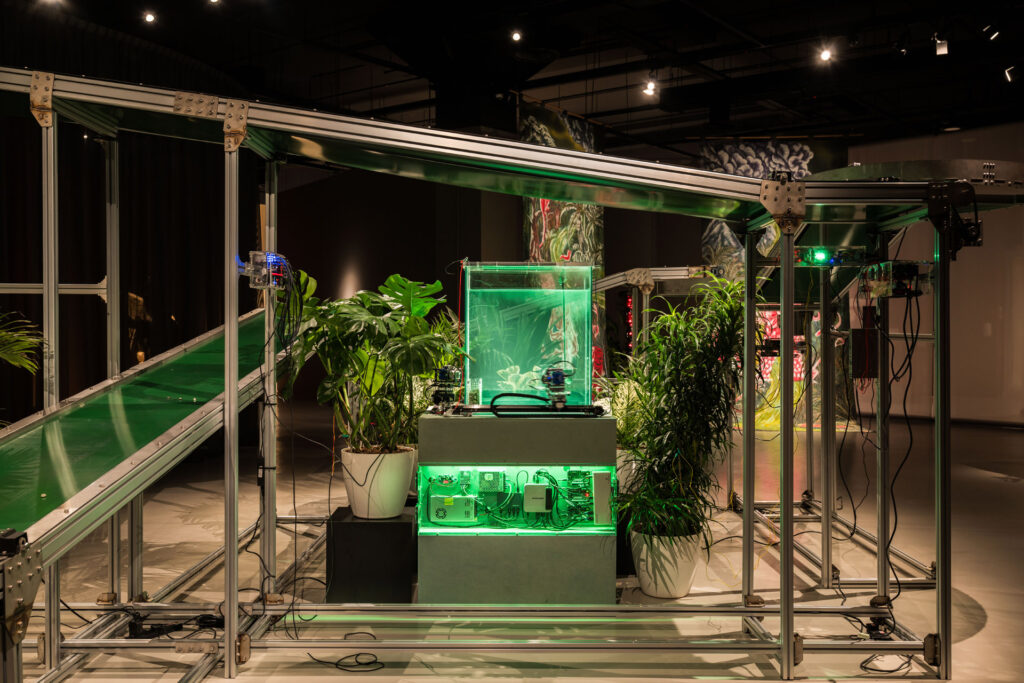
In these works, the machine is not controlled directly by humans, but influenced by nature. By using biofeedback from plants, the system depends on signals that I cannot fully predict. The plant affects timing, response, and rhythm. It’s not a decoration, but part of how the system operates.
At the same time, I see this as giving nature a symbolic role. The plant represents a presence that is usually excluded from industrial systems. So the hierarchy shifts. Instead of humans fully controlling the machine, it has to respond to something non-human.
The title brings together two opposing ideas: ‘Nafasan Bumi (breath of the Earth)’ and ‘An Endless Harvest’. How do you understand this contrast within your own works?
For me, the contrast is about imbalance between two systems.
“Nafasan Bumi” refers to natural cycles, something that has rhythm and recovery. “An Endless Harvest” describes an industrial system designed to keep extracting without stopping.
In the work, these two conditions exist together. One is cyclical and regenerative, the other continuous but not restorative.
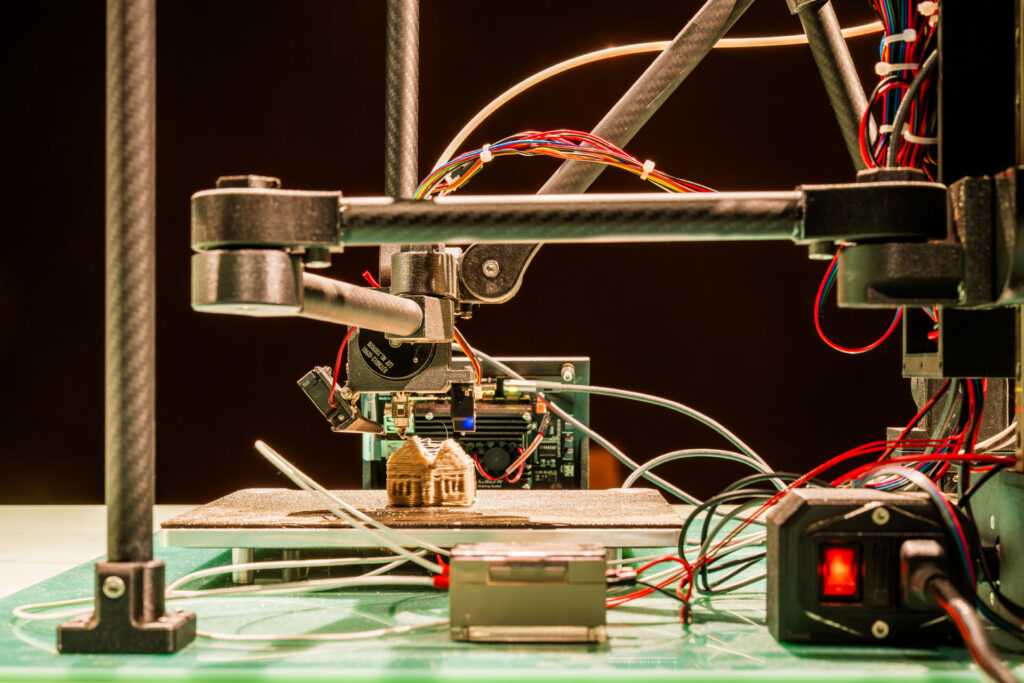
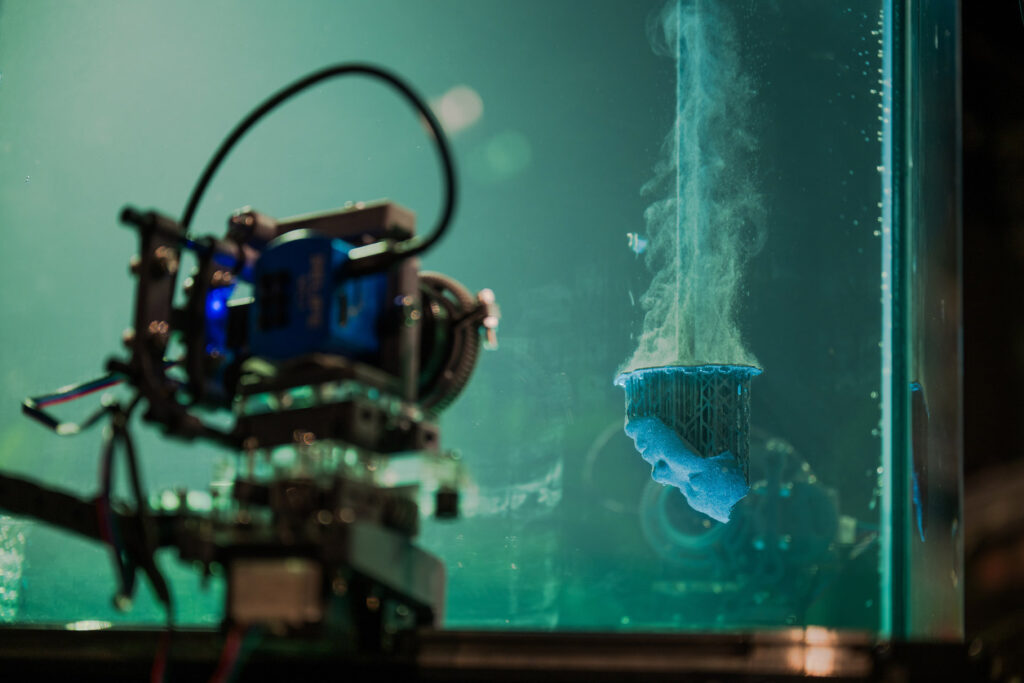
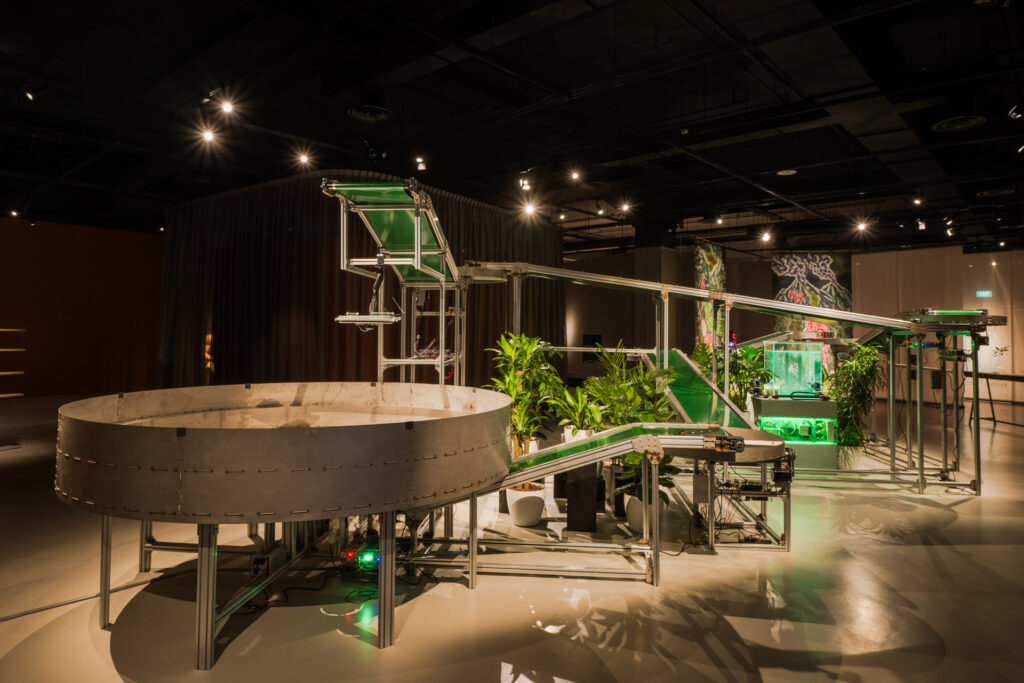
In L.O.O.P, the process continues through a constant cycle, but nothing returns to the source. It runs, but it doesn’t repair itself.
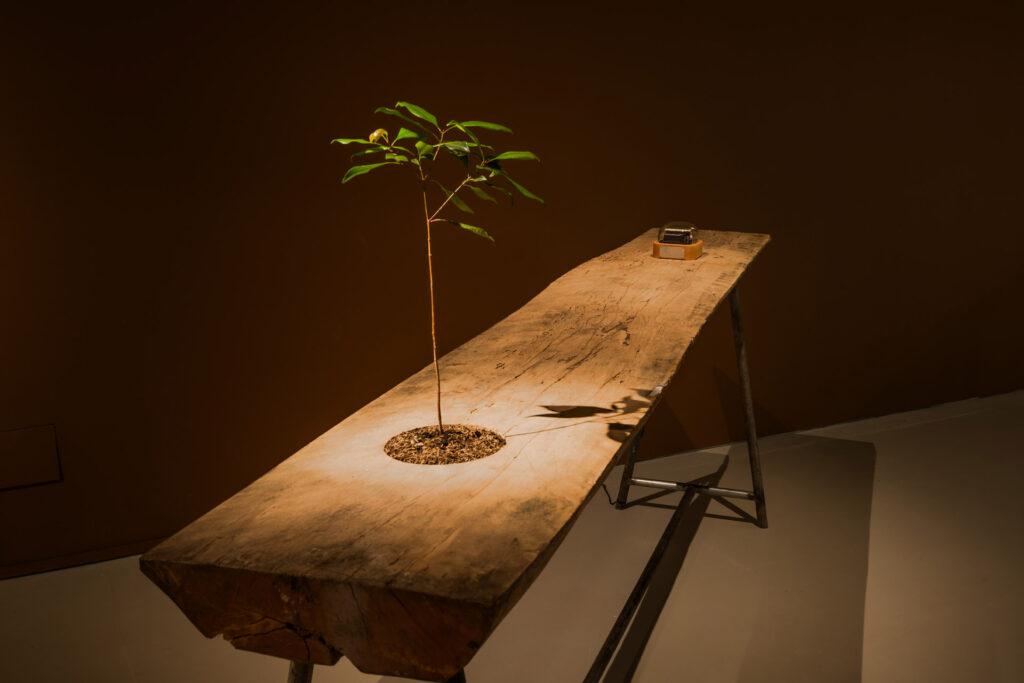
At the same time, L.O.O.P sends feedback to L.O.G through sound. The feedback comes from music boxes mounted on wood affected by deforestation. So what you hear is not only mechanical, but also carries a trace of the forest that has been lost.
This creates a chain between what is causing and what is receiving. The system is connected, but the feedback does not restore the source. It only extends the cycle.
Your use of materials such as nickel and references to mining and plantations inevitably point to colonial and post-colonial histories. How do colonial legacies continue to shape today’s extractive economies in Indonesia?
Colonial history established Indonesia as a source of raw materials. That structure still continues today. Even though the political system has changed, the economic model remains largely based on extraction and export.
Materials like nickel are now framed as part of a global green transition, but the logic is similar. Resources are extracted locally and distributed globally, often with uneven benefits. Many of these resources were already identified and mapped during colonial exploration. What is happening now is a continuation of that process.
We are still mostly in the position of supplying raw materials, even though there is capacity to process and industrialise them into higher-value products. That requires long-term investment in human resources, ecosystems, and research and development.
But this kind of investment takes time and patience, and it is not always prioritised. So I see continuity rather than a clear break. The systems have evolved, but the dependency on extraction remains.
In my works, machines are influenced by nature. By using biofeedback from plants, the system depends on signals that I cannot fully predict. The plant affects timing, response, and rhythm. It’s not a decoration, but part of how the system operates.
At the same time, I see this as giving nature a symbolic role. The plant represents a presence that is usually excluded from industrial systems.
So the hierarchy shifts. Instead of humans fully controlling the machine, it has to respond to something non-human.
Works like ‘Fabric of the Earth’ and ‘L.O.O.P’ unfold slowly over time. Why is duration important to how you think about labour, loss, and environmental damage?
Duration is important because these processes don’t happen instantly. Extraction, labour, and environmental damage unfold over time. They accumulate. Sometimes the impact is not immediately visible, but becomes clearer the longer the system runs.
In my work, repetition and continuous movement reflect that condition. Over time, you start to notice changes, tension, or even fatigue in the structure. Labour is also embedded in that duration. It is not a single action, but something repeated, maintained, and sustained.
So instead of showing a dramatic moment, I’m interested in building a condition that develops gradually. The longer you stay with the work, the more you become aware of that accumulation.
‘L.O.G (Lenyap Oleh Gerigi)’ functions as an extension of ‘L.O.O.P’ through sounds. How does sound help you translate ecological violence into something felt rather than simply seen?
Sound works on a different level than visuals. You don’t always need to look directly at something to feel it. Vibration, frequency, and repetition can affect the body.
In ‘L.O.G’, sound extends the mechanical process from ‘L.O.O.P’. The dropping of nickel in ‘L.O.O.P’ triggers notes through a modified MIDI system placed at the end of the loop. Those signals are then translated into sound in ‘L.O.G’.
The sound is produced by music boxes mounted on wood affected by deforestation. So what you hear is not only mechanical, but also carries a trace of the forest that has been lost. This creates a chain between the source and the receiver. Material, system, and sound are all connected.
I’m not trying to illustrate ecological violence directly. Instead, I’m creating a condition that can be felt physically. The sound surrounds the audience and makes the system felt, not just seen.
Although your works are rooted in Indonesian sites such as Sidoarjo and Sulawesi, they speak to global systems of production. How do you see Southeast Asia positioned within these wider material and economic circuits?
I see Southeast Asia as part of a larger system of extraction and distribution, but often in an unequal position. The region provides input for global industries, while much of the value is generated elsewhere. Materials move outward, but the environmental and social consequences remain localised.
Indonesia is deeply connected to this system. Resources like nickel are essential for global production, but the feedback does not return in the same way. Benefits and impacts are not evenly distributed.
So Southeast Asia functions both as a supplier and as a site of consequence. It supports global systems while also carrying their effects. My work reflects that imbalance. Local sites are not isolated, but nodes within a larger network shaped by global demand.
‘Nafasan Bumi ~ An Endless Harvest’ is on view at Singapore Art Museum until 31 May 2026. For more information, please click here.
INTERVIEW COURTESY OF ART WORLD DATABASE AND BAGUS PANDEGA, MARCH 2026