

Guest contributor Sonia Kolesnikov-Jessop speaks to Ming Wong on the occasion of his National Gallery London residency. The Berlin-based Singaporean artist’s latest work explores how Saint Sebastian has been interpreted throughout history.
Saint Sebastian has fascinated artists for centuries. A Roman soldier martyred for his Christian faith, he appears both as a victim and a figure of eroticised beauty, his suffering and exposed body carrying complex layers of devotion, vulnerability, and desire. Early medieval depictions emphasised martyrdom through violence, with his body riddled with arrows; during the Renaissance, artists tempered this violence, focusing instead on the elegance and form of the male body. By the late 19th century, Saint Sebastian was increasingly read as a queer figure, a perception made explicit in the 20th century by writers, filmmakers, and artists who recognised in his wounded beauty a figure of desire, secrecy, and persecution.

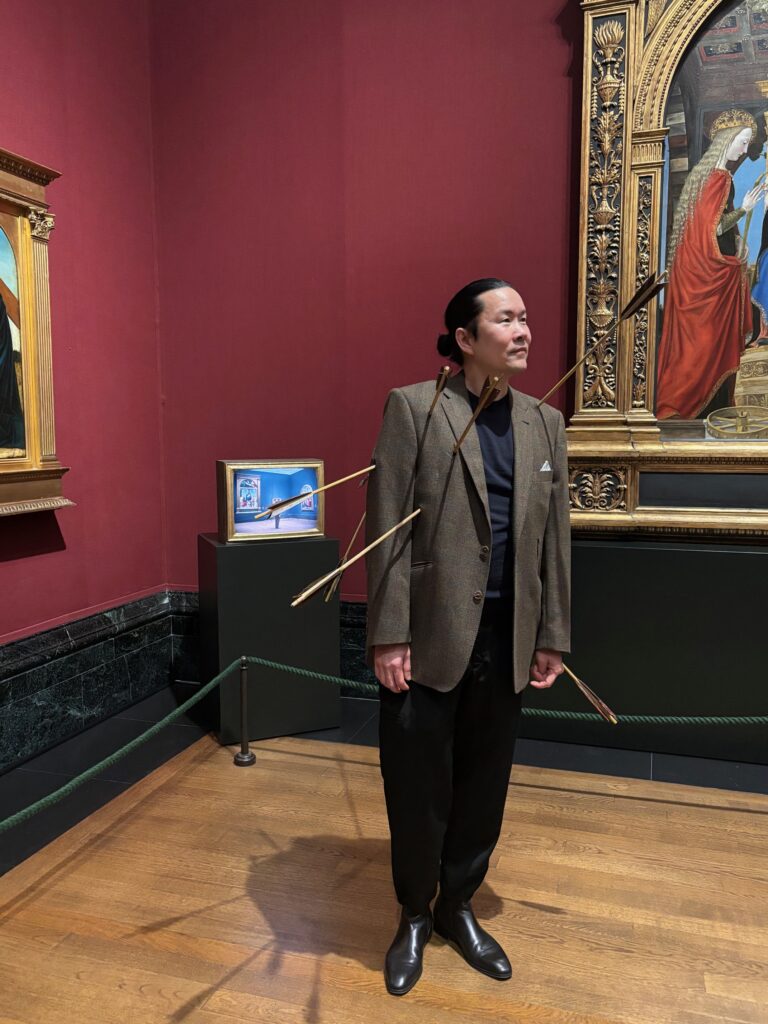
Berlin-based Singaporean artist Ming Wong has long navigated the intersections of cinema, performance, and historical reference. In his latest work, ‘Dance of the sun on the water | Saltatio solis in aqua’, he focuses explicitly on Saint Sebastian, exploring how the figure has been interpreted across time. Unveiled at the National Gallery in London after a year-long residency, the installation continues his practice of using historical and cinematic references to reframe familiar stories with the artist employing miscasting and temporal layering as tools to examine how identity, language, and narrative circulate across time.
Wong admits he knew very little about Christian paintings or Saint Sebastian before the residency. “I knew him as a queer icon from 20th-century art… but it was only with this project that I found out about the actual history of Saint Sebastian being a Christian martyr.”
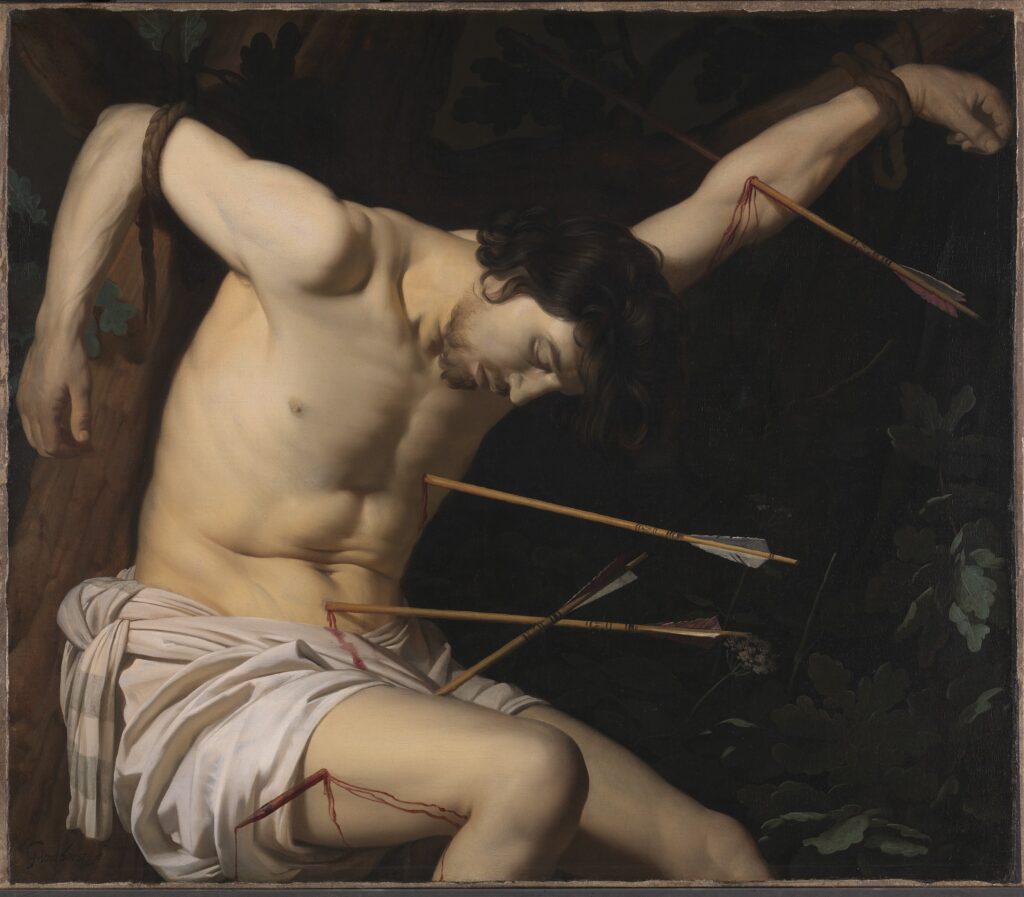
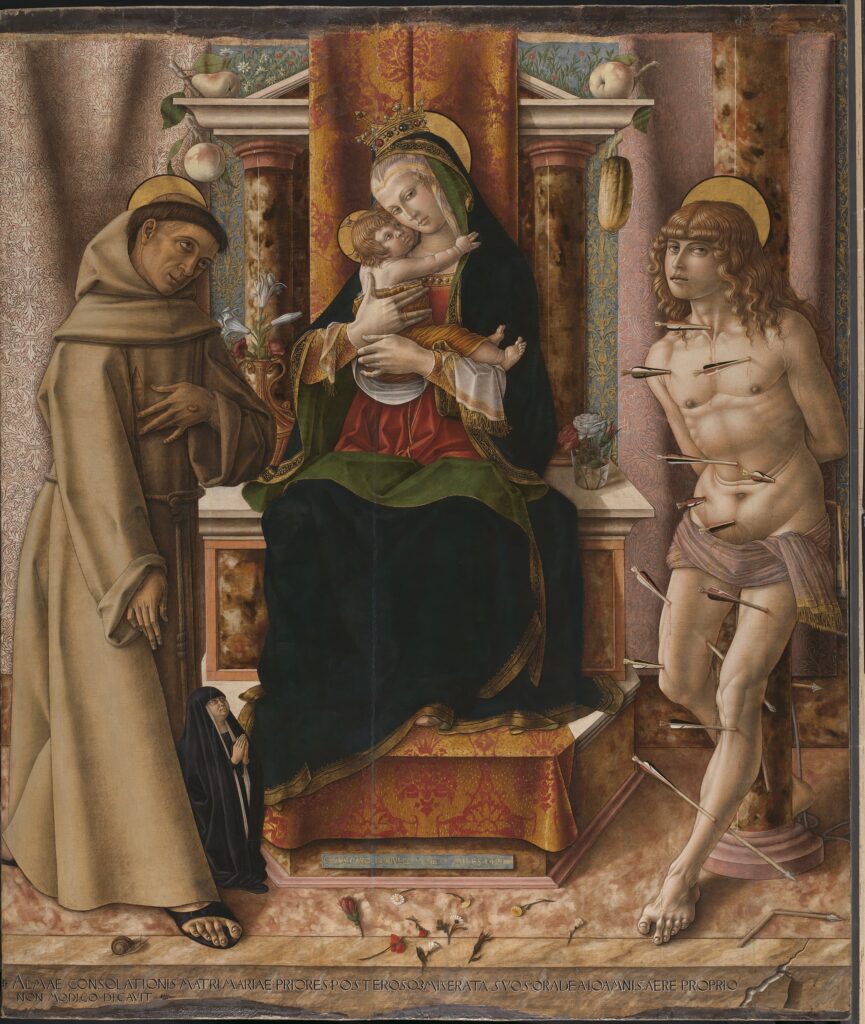
Walking through the collection, the artist was struck by how often Saint Sebastian appeared—the Gallery holds fourteen paintings of the Saint, each reflecting the era in which it was created. “He keeps appearing in different guises across time,” Wong says. “He’s like a time-travelling hero—as a protector against the Black Death, as patron saint for athletes, archers, policemen. He was a big icon during the AIDS crisis in the 1980s.”
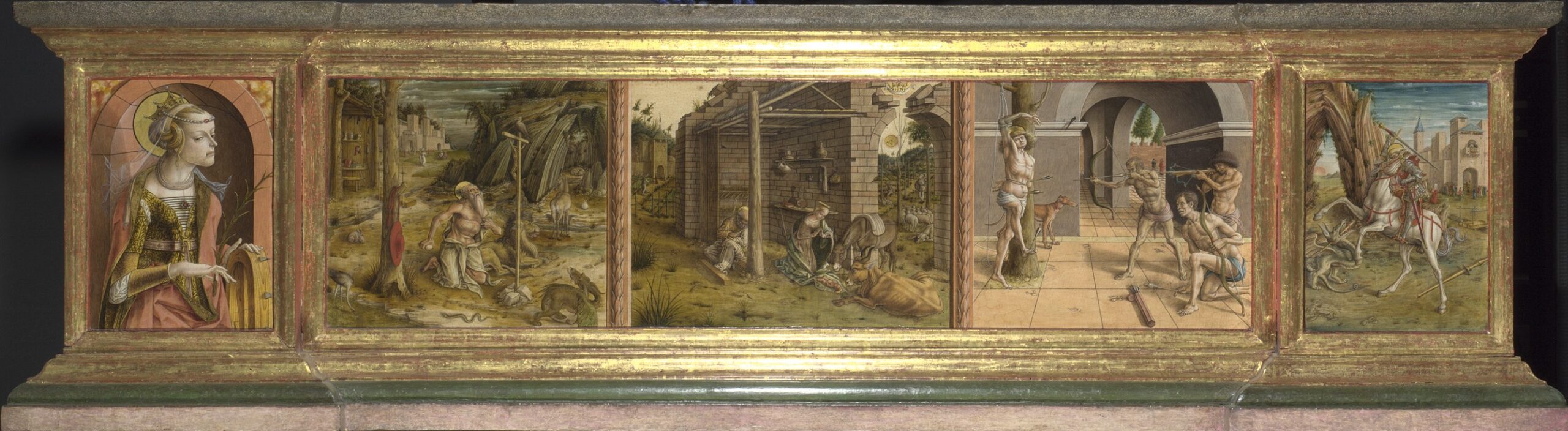
During his early research, Wong was also drawn to the Gallery’s predella panels—the small narrative scenes at the base of medieval and early Renaissance altarpieces—likening their four-by-three format to “medieval televisions.” His final concept for ‘Dance of the sun on the water | Saltatio solis in aqua’ crystallised after he decided to rewatch Derek Jarman’s 1976 film ‘Sebastiane’—spoken entirely in Latin and notable for its frank depiction of male desire.

“In a way, I’m a copyist. I copy the masters—only in my case, it’s cinematic masters…I’ve always wanted to do something with Derek Jarman because he’s one of my heroes,” he says, recalling how the late British filmmaker’s work and his use of Super 8 film influenced him when he was a young queer artist at the Slade School of Art.
Wong draws on Jarman’s placement of queer desire in an ancient setting, extending the approach by layering medieval painting, cinematic references, and contemporary performers into a single visual field. But rather than reproducing the hyper-masculine Roman soldiers of traditional depictions, he cast British actors of Asian or part-Asian heritage, deliberately avoiding fixed ideas of gender.
“One important departure [from Jarman’s film] was that my work is not just about gay identity as in homosexual male identity. I think today it’s a lot more complex. I wanted to bring in other perspectives because for me, it’s always shifting. In the casting, we had quite a range of different bodies, a range of pronouns. That’s somehow an extension of who I would imagine I would be if I were a young queer performer today,” Wong explains.
“They’re all different extensions of myself,” he adds. “If I had chosen different paths when I was a young gay art graduate in London, I could have become any one of them.” By casting this diverse group, Wong deliberately avoids a singular reading of Saint Sebastian. Each performer takes turns embodying the role, becoming both martyr and destroyer, and through this rotation, the figure resists moral simplicity. “There are no clear heroes or villains, only figures negotiating belief, desire, fear, and power,” Wong says.
Language forms another layer of this disruption. Wong chose Vulgar Latin—the everyday speech of Roman soldiers—over the refined Latin of the Church. “I thought it would be something for me to subvert—that we are attempting to re-speak it with a cast that is surprising in their identity, age, colour, and role.” Hearing this vernacular spoken by performers whose identities already challenge expectation creates a deliberate friction, a “glitch” that recalls Jarman’s disruption of historical narratives. “You have this glitch both visually but also in your own preconceptions. I think this is necessary and useful so that we’re not just complacent with what we think we already know.”
Looking ahead, Wong’s next work will return to Cantonese opera research, which has taken him to Vancouver, where he uncovered records of Chinese cowboys in early settlements—another unexpected cultural collision. “I knew the history of Cantonese opera had a meeting with early American folk music, meaning early country music,” he explains. “They adopted certain instruments like Hawaiian guitar and steel guitar.” Though no recordings survive, historical accounts suggest these opera troupes engaged with early country music.
“Now the opera is really about the convergence of Cantonese opera and country music,” Wong says. It’s another temporal collision, another instance of cultural forms meeting and transforming in ways official histories often overlook. With funding secured for development and research, he’s working towards a new work in 2027.
Ming Wong’s installation ‘Dance of the sun on the water | Saltatio solis in aqua’ is on view at National Gallery London until 5 April 2026. For more information, please click here.
INTERVIEW COURTESY OF MING WONG AND SONIA KOLESNIKOV-JESSOP FOR ART WORLD DATABASE, JANUARY 2026